


From the Gulf to Singapore: Your Family’s Guide to a Smooth New Start
Your insider guide from XCL World Academy, home to families from over 50 nationalities

Singapore has a way of surprising new arrivals. That anxiety tends to dissolve faster here than in most cities. The infrastructure is reliable, the city is safe, and schools, community, and daily logistics are all genuinely well served.
It has become a well-established destination for families relocating from the UAE, Saudi Arabia, Qatar, Kuwait, and Bahrain. Direct flights connect Dubai and Abu Dhabi to Singapore in roughly seven hours. The UAE dirham and Saudi riyal convert favourably against the Singapore dollar, and the city's low crime rate, clean streets, and family-oriented infrastructure will feel familiar to families accustomed to the Gulf's modern urban standards.
The lifestyle transition is also less dramatic than families expect. Singapore shares some of the Gulf's defining qualities: a modern skyline, world-class shopping, high-end dining, and an expectation that public spaces are clean, safe, and well-maintained. Families accustomed to domestic helpers will find the same arrangement common and straightforward to set up in Singapore.
This guide covers what you need to know in those first weeks: where to live, how to get around, what to eat, and above all, how to navigate the schooling decision that, once settled, makes everything else fall into place.
Finding your neighbourhood
Singapore is compact enough that most families find themselves within a 15–20 minute commute from their child's school regardless of where they settle, which means where you live is largely a matter of lifestyle preference rather than logistics.
A few neighbourhoods worth knowing:
The North (Yishun, Seletar, Khatib) offers a quieter, greener pace without sacrificing convenience. Rental costs tend to be more reasonable than in the central belt, and the area is lush with parks and reservoirs. Seletar Aerospace Park adds a lively dining and lifestyle scene close by.
Bukit Timah suits families who want space and outdoor access. Spacious landed properties and condominiums sit alongside Bukit Timah Nature Reserve and the UNESCO World Heritage-listed Botanic Gardens.
Holland Village and Tanglin offer a community feel with leafy streets, boutique amenities, and good transport links.
East Coast is popular with families who prioritise outdoor life. The beach, cycling paths, and a relaxed weekend rhythm make it a strong option for active households.
Families relocating from the Gulf often gravitate toward condominiums in the central or northern districts, where resort-style facilities, security, and community infrastructure closely mirror what they are used to at home. Many newer developments include pools, gyms, and landscaped grounds as standard.
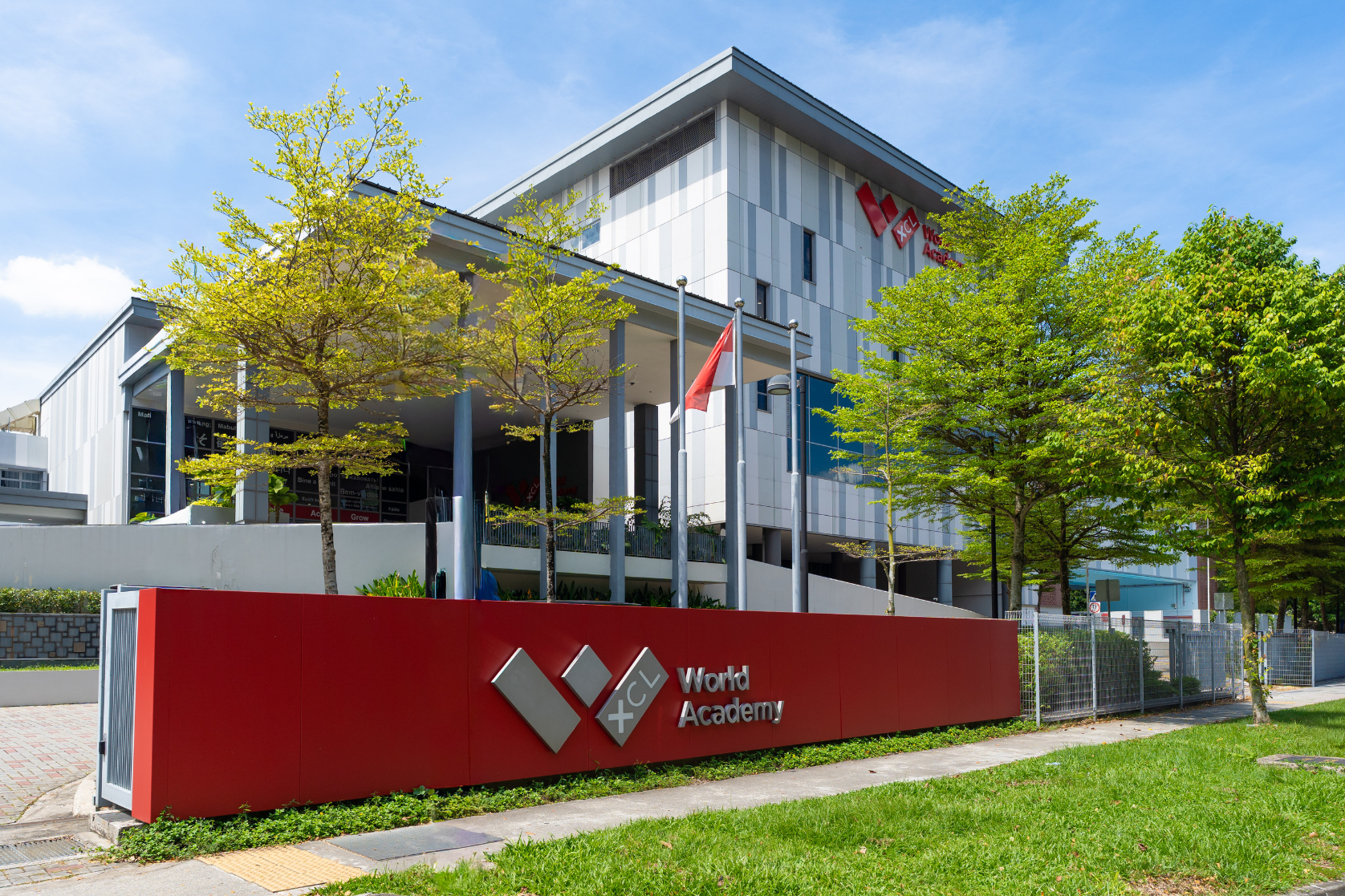
XCL World Academy is located on a 5-hectare campus in Yishun, northern Singapore, accessible by MRT (Mass Rapid Transit, Singapore's underground and overground rail network) from Yishun and Khatib stations. For property browsing, PropertyGuru and 99.co are the most widely used platforms.
Getting around
Singapore's public transport system is fast, clean, and covers most of the island. The MRT runs frequently and connects most major residential areas; buses fill the gaps and give you a chance to see neighbourhoods at ground level.
For everyday use: Citymapper handles multi-modal route planning well, and the EZ-Link card covers MRT, buses, and some taxis on a single top-up card.
Grab is Singapore's equivalent of Uber and handles everything from standard rides to family-sized vehicles. TADA offers competitive pricing with transparent fare structures.
If you're used to driving your own car daily, Singapore takes some adjustment. The government limits the number of vehicles on the road through a Certificate of Entitlement (COE) system, which adds a substantial cost on top of the car price itself. The practical effect is that private car ownership is expensive and, for most families, unnecessary. Singapore's MRT, buses, and ride-hailing apps cover the city efficiently, and most destinations including XWA's campus are reachable within 20–30 minutes without a car.
Eating like a local
UNESCO recognised Singapore's hawker culture in 2020 as an intangible cultural heritage, one of just a handful of food traditions to receive that designation. These open-air food centres serve generations-old recipes at prices that have stayed low even as the city around them has become considerably more expensive.
Halal food is widely available across Singapore. Most hawker centres include certified halal stalls, and dedicated halal restaurants cover everything from Middle Eastern cuisine to local Malay dishes. Families from the Gulf will find this significantly easier to navigate than many other international cities.
Singapore is home to a significant Muslim community, and that shapes daily life in practical ways. Mosques are distributed across all neighbourhoods, prayer facilities are standard in major malls and public buildings, and halal-certified food options are available across the city, including in most hawker centres.
If you're new, start here:
- Maxwell Food Centre (CBD): dense with award-winning stalls. Tian Tian Hainanese Chicken Rice at #01-10/11 is consistently cited as a benchmark for Singapore's national dish.
- Yishun Park Hawker Centre: a short walk from XWA's campus, with excellent variety and notably good Nasi Lemak at #01-33.
- Chinatown Complex Food Centre: over 200 stalls, including the Michelin-recognised Liao Fan Hawker Chan at #02-126.
Don't leave without trying char kway teow (stir-fried flat rice noodles with wok hei), roti prata (a flaky pan-fried flatbread served with curry), and kaya toast with soft-boiled eggs for breakfast.
The education decision: what families need to know
This is the choice that tends to generate the most anxiety for relocating families, and with good reason. The right school shapes your child's language development, friendships, and academic pathway for as long as you're in Singapore.
Understanding the differences helps you choose based on what matters for your family, not on assumptions.
Local vs international schools: a practical comparison
Singapore's Ministry of Education (MOE) schools are academically rigorous, particularly in mathematics, science, and bilingual learning. Fees are substantially lower, subsidised by the government. However, admission for international students runs through the AEIS or S-AEIS placement system, priority goes to Singapore Citizens and Permanent Residents, and availability for international families is limited.
International schools offer broader curriculum choices: IB, IGCSE, American, British, Australian, French, CBSE, and others. The student body is typically multinational, co-curricular activities are extensive, and the admissions process is a direct application to the school. Fees range from approximately S$12,000 to S$50,000 annually depending on the school and year level. International school enrolment is open to Singaporean families too. Children under 7 can join without restriction; those 7 and older require an MOE exemption.
The decision ultimately comes down to your child's learning style, your family's timeline in Singapore, and your long-term plans for university pathways.
What to look for in an international school
Beyond curriculum, the factors that shape a family's day-to-day experience include:
Community and belonging. Research across Singapore's international school sector consistently shows that community matters significantly to parents. Parent referral is one of the strongest drivers of school consideration, and "poor parent service" is cited by 29% of families as a reason for switching schools. Look for schools with measurable community infrastructure: regular parent events, staff dedicated to family support, and a process for welcoming new arrivals. [source: BVA BDRC International Schools Study 2024-25, Singapore]
Support for new arrivals. Relocating with children is a particular kind of stress. Schools with structured onboarding, mid-year transition support, and dedicated staff for overseas families mean your child is in a social group and a familiar routine within days, not months.
IB pathway clarity. If university pathways matter to your planning, the International Baccalaureate Diploma Programme (IBDP) is widely recognised by universities globally and offers a consistent benchmark regardless of where your family is based.
Understanding how a school supports students through PYP to MYP to DP shows whether your child is building on a coherent foundation or having to adjust with each movem while also giving your family the flexibility to relocate to the Middle East or anywhere else in the world without disrupting their academic pathway.
Facilities. Singapore's international schools differ widely on campus quality. Libraries, performing arts spaces, science labs, sports facilities, and technology integration vary significantly. Visit in person before deciding.
XCL World Academy: built for families like yours
XCL World Academy (XWA) is an IB school in northern Singapore offering the IB continuum from 18 months to 19 years. The campus sits on five hectares in Yishun, approximately 20 minutes from Singapore's city centre.
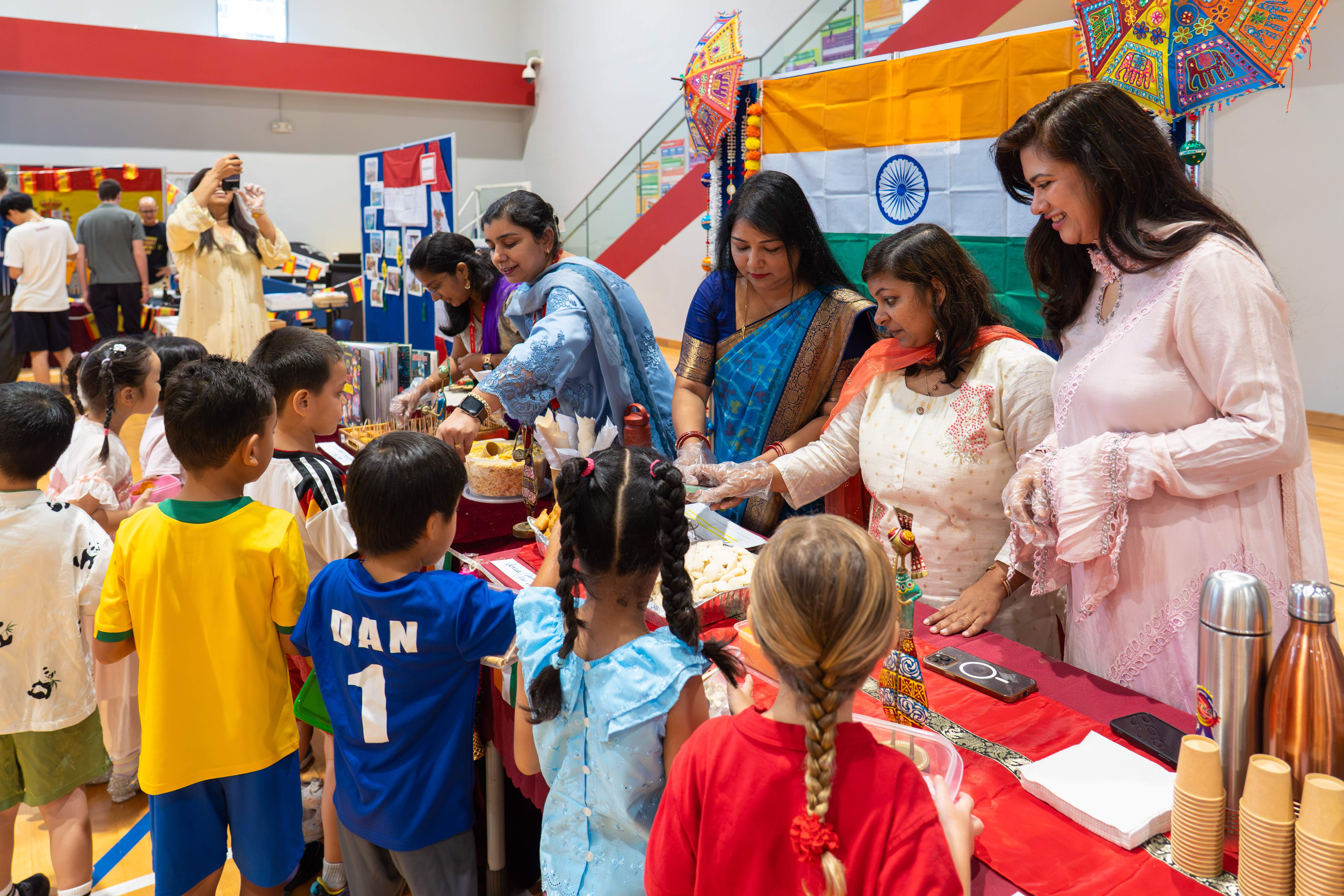
A community of over 50 nationalities. At XWA, students from over 50 nationalities learn together, and that breadth of background is embedded in everyday life rather than a marketing footnote. XWA's community currently includes families from across the Middle East, and Arabic-speaking children typically find peers from familiar backgrounds quickly.
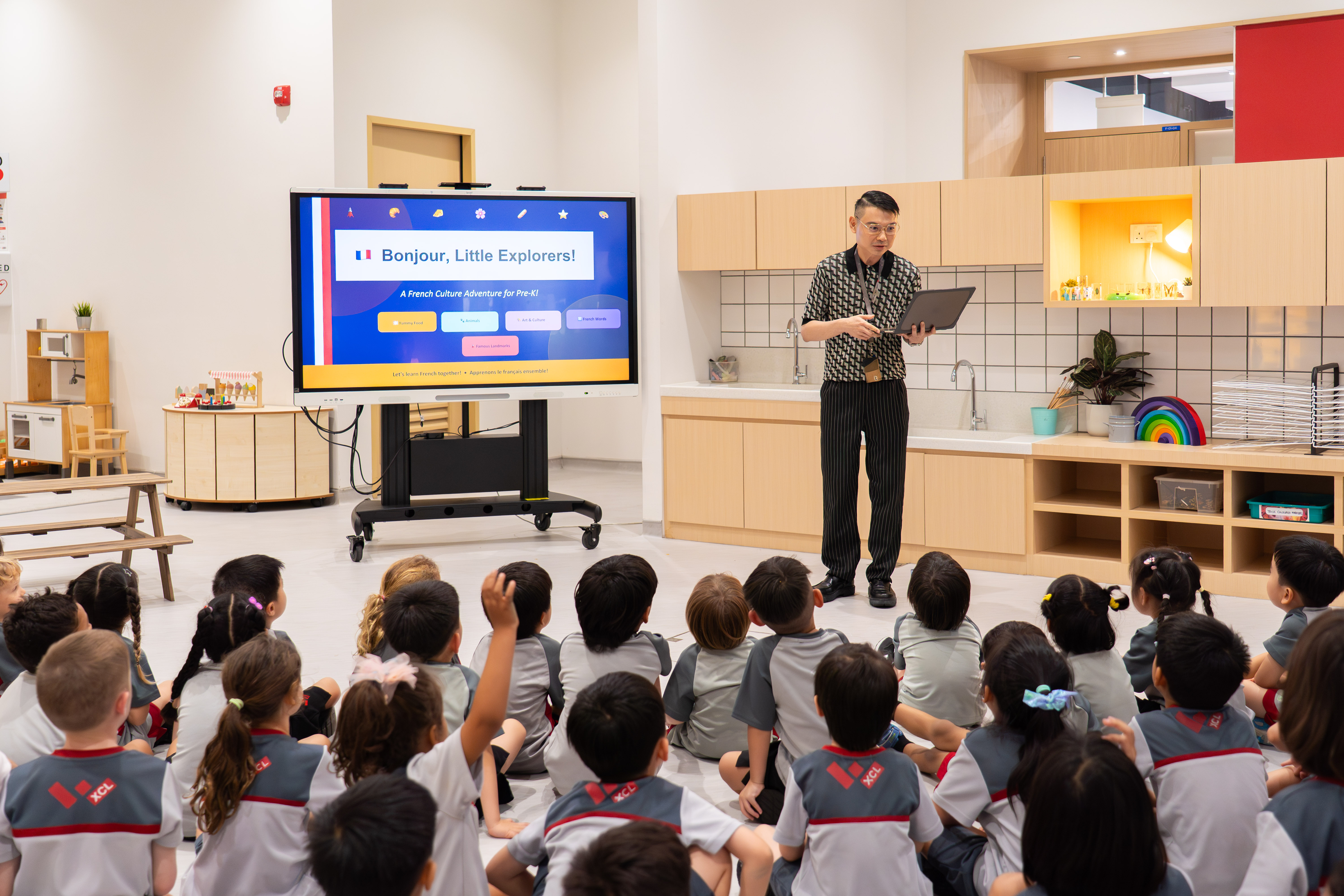
Brand new Early & Primary years Campus. For families with younger children, XWA’s brand-new Early Years and Primary Years (EYPY) campus has been purpose-built to support how children learn best in their formative years. Designed with dedicated learning zones, age-appropriate facilities, and a strong focus on inquiry-led exploration, the space creates a nurturing environment where children develop confidence, independence, and a genuine love for learning from the very start.
A campus that takes sport, technology, and ambition as seriously as academics. The campus includes two libraries with over 35,000 books, an Olympic-sized pool, an indoor heated pool, a FIFA-grade football pitch, and a 750-seat auditorium. The Innovation Hub houses Singapore's first international school eSports arena, alongside robotics labs, VR suites, and podcast studios. Children who pursue sport, arts, science, or technology find professional-grade facilities from early years through to Diploma.
.jpg)
Strong, consistent academic results. IBDP scores at XWA consistently exceed the global average. As of March 2026, the Class of 2026, comprising 53 students, has already secured over 550 university offers from leading institutions such as New York University, University College London, and University of Edinburgh, among others. Collectively, they have also been awarded more than USD 23 million in university scholarships.
Support from the moment you arrive. The Parent Relations Executive (PRE) team exists specifically to help new families settle in. They connect arrivals with the PEACC parent community, introduce them to families who've navigated the same transition, and offer practical guidance on life in Singapore. Parent ambassadors, including families who have relocated from overseas, are available for direct conversations before you enrol.
AI and technology, integrated with purpose. Technology at XWA is woven into curriculum delivery across all year levels, building the skills children will use in university and work.
Preparing students for what’s next. Beyond academics, XWA’s XCLerate Future Skills Programme is designed to equip students with the skills that matter in a rapidly changing world. From entrepreneurship and leadership to emerging technologies and real-world problem solving, students engage in experiences that go beyond the classroom, helping them build adaptability, creativity, and future-ready thinking from an early age.
A current XWA family, the Van Zutphens, say “From the moment we arrived at XWA, it felt like home. We’ve watched our children grow in confidence and curiosity, supported by a school that truly brings together the best of curriculum, campus, and culture.”
You can read more about what parents have to say about XWA by clicking here.
Settling in starts with a conversation
The practical aspects of settling into life in Singapore often fall into place quickly. Choosing the right school, however, is a decision with lasting impact, and one that deserves careful thought.
At XCL World Academy, regular open days and campus tours give you the opportunity to experience the school firsthand, meet current families, and ask the questions that matter most.
To take the next step, book a personalised campus tour or connect directly with the admissions team to explore what XWA could look like for your family. You can also download the XWA Digital Guide for a deeper understanding of academic pathways, university outcomes, bilingual development, and everyday life at the Academy.
Our admissions team will be more than happy to answer your questions and support you every step of the way, ensuring your transition is as smooth as possible.



.jpg)