

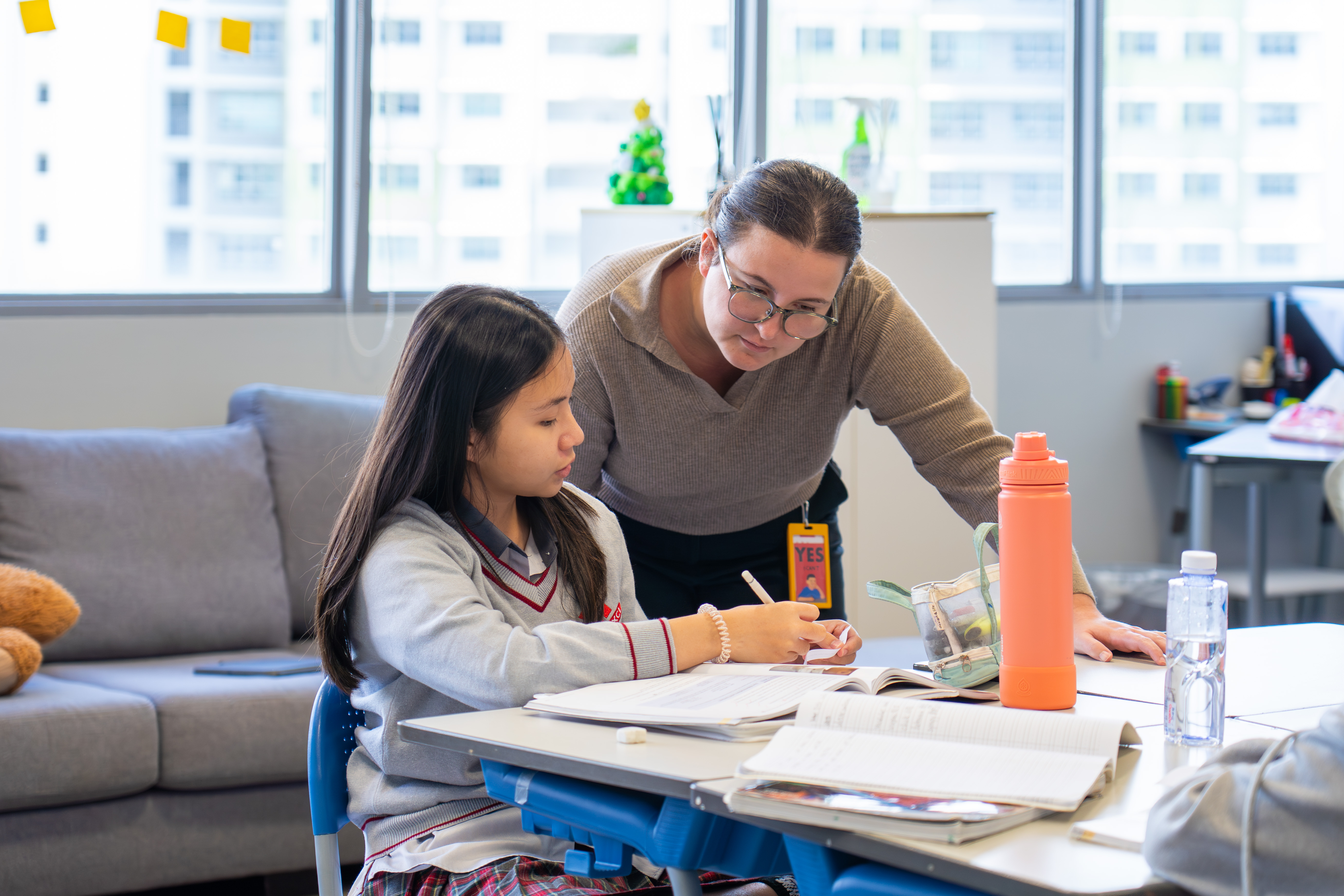
FEP is Designed for Students Who

Are relocating from countries where English is not the primary language of instruction

Have a strong academic ability in their home language and need structured English development

Would benefit from a bridge to the IB Middle Years Programme
Are ready for academic challenge alongside language development
FEP is designed for students in Grades 6–9 whose English proficiency is still developing. These are academically capable students who need structured support to succeed in an English-medium environment.
Many join from schools in Japan, Korea, China, and beyond, where English was taught as a subject rather than the language of instruction. They bring strong academic foundations in their home language, and FEP builds on these strengths, treating home languages as assets to accelerate English development.
A Global Team of Multilingual Educators Who Understand the Bilingual Journey
FEP teachers bring deep expertise in language acquisition and understand firsthand what it means to learn, think, and succeed in multiple languages. The team comprises of teachers from the United States, Sweden, Italy, China, Korea, and Singapore, and is trained in proven methodologies such as Sheltered Instruction Observation Protocol (SIOP) and English as an Additional Language (EAL). Many are multilingual themselves, speaking English, Mandarin, Korean, Italian, Swedish, and more.
This diversity enables teachers to make meaningful connections between languages, helping students transfer skills from their home language to academic English. By comparing grammar, structure, and usage across languages, students grasp concepts more quickly. With multilingual educators, cross-linguistic teaching, and authentic cultural perspectives, every lesson is both rigorous and relevant.

What Your Child Gains Over Time
Research shows that students in bilingual programmes often make strong gains in both language development and overall learning. In this programme, students not only learn two languages, but also learn through both languages—using them to think, communicate, and solve problems across subjects. This strong bilingual foundation prepares students well for the IB Middle Years Programme.
By this stage, your child will have spent years reading, writing, discussing, and interpreting increasingly complex ideas across subjects in two languages, developing both academic proficiency and confidence.
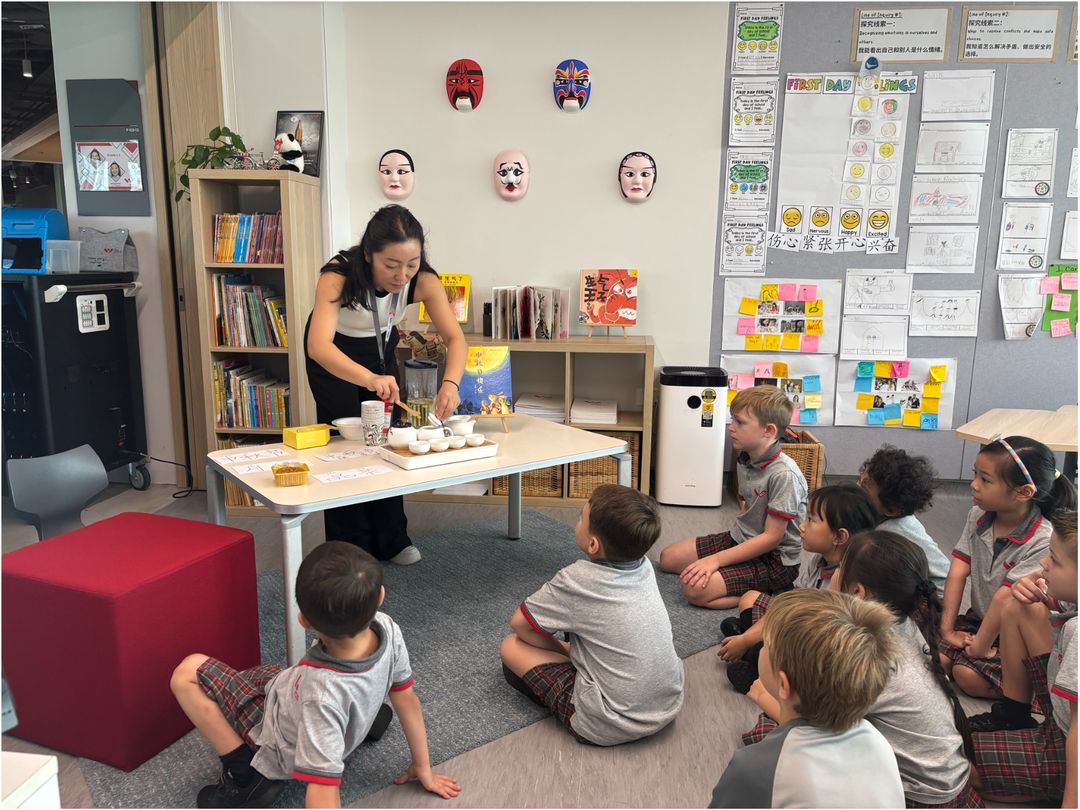
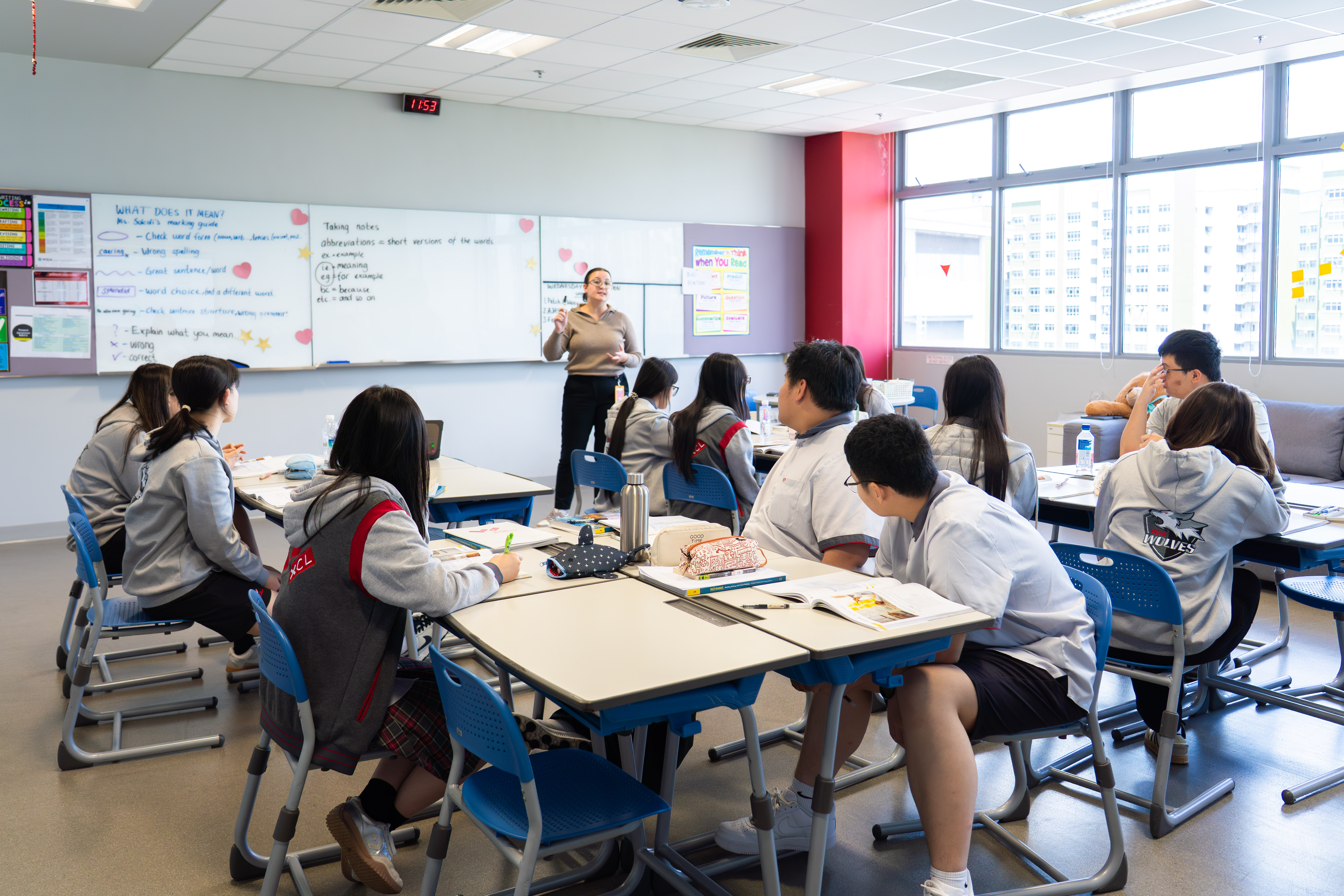
Measurable Progress Every Semester
FEP tracks student progress using the internationally recognised WIDA framework, with assessments conducted twice a year. In the most recent cycle, over 88% of students showed improvement, with an average gain of 0.9 points per cycle and the strongest growth in Reading (+1.15).
These results show meaningful progress within a short time frame, with nearly 30% of students improving by close to a full proficiency level in six months. Over a full year, most students are ready to transition into mainstream classes with EAL support.
How the Programme Is Organised
The FEP day is structured so that demanding academic subjects happen in the morning, when students are most focused, with creative and practical sessions in the afternoon.
Students are grouped by grade level. The programme follows a modified mainstream timetable where language acquisition is the primary lens, but academic content remains at grade level. Core subjects are taught with embedded language objectives, meaning students acquire content knowledge and academic English simultaneously.
The Grade 9 Bridge
Grade 9 students take double credits in both English and Mathematics, giving them more time to build the skills needed for IGCSE or IB Diploma pathways.

Morning (Homeroom)
20-minute connection time plus 15-minute Sustained Silent Reading (SSR)

Morning Blocks (P1–P2)
Core academics: ELA, Mathematics, Literature, Science, Individuals & Societies

Afternoon Blocks (P3–P5)
Language support (WIDA), electives (Media Studies, Music, Visual Arts, E-Sports, Theatre), Practical Literacy, PE, PSHE
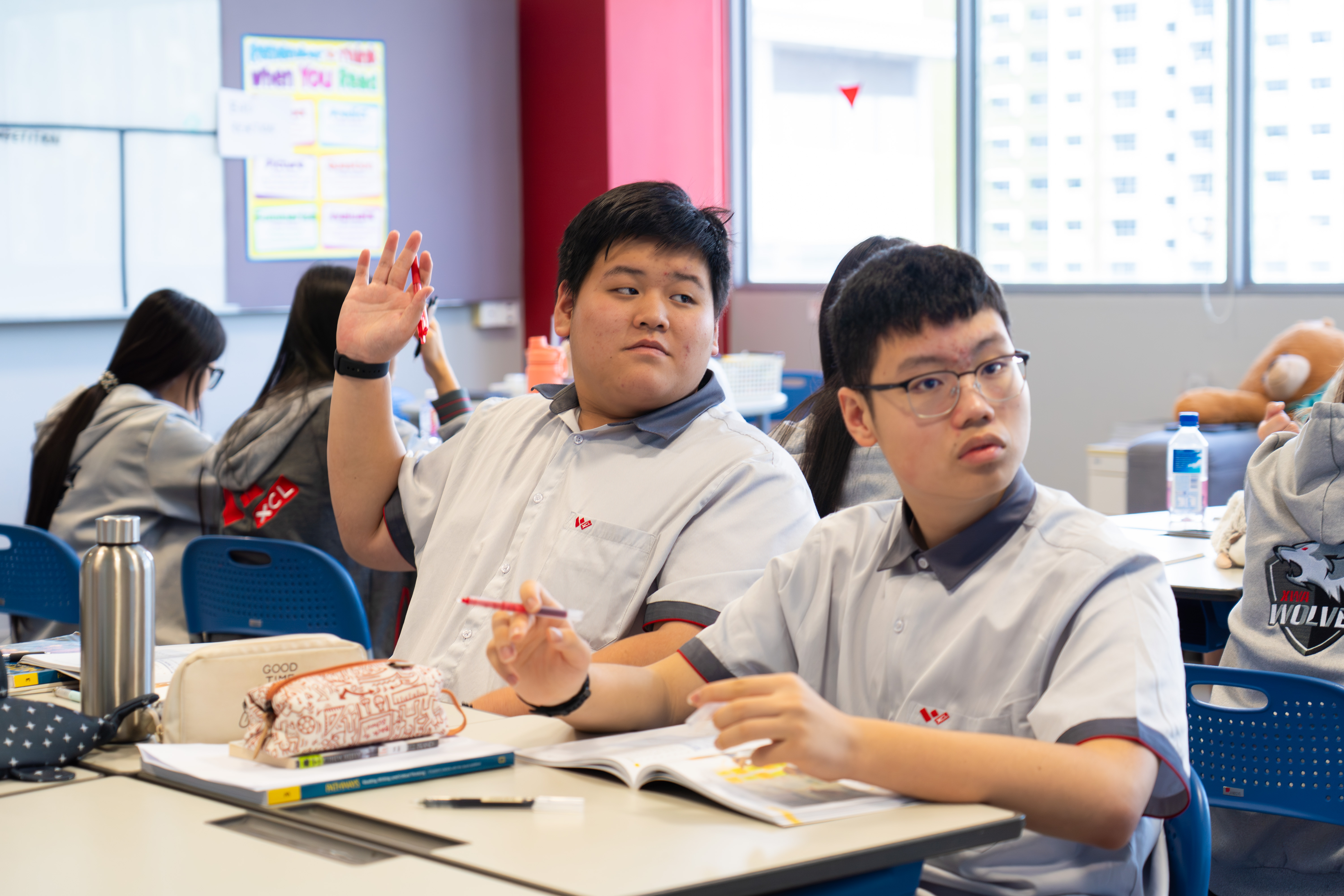
Language Learning Through Creative Expression
Integrated Arts & Language (IAL) is a core part of the FEP curriculum, combining language acquisition with project-based learning across visual arts, music, and drama. It offers a low-anxiety, high-engagement way for students to build communication skills, such as creating dioramas with narration or composing music inspired by literary themes.
Part of the School Community
From day one, FEP students are active members of the wider school community, participating in electives, extracurricular activities, and school events alongside their peers. Through elective rotations in Music, Visual Arts, Media Studies, E-Sports, Theatre, and Physical Education, they build friendships, gain confidence, and experience success in areas where language is less of a barrier.
Students also take part in choir, the annual musical, sports teams, student council, and community outreach, including an intergenerational programme with Sree Narayana Mission. Each student’s progress is closely monitored to ensure personalised support, while full participation in school life strengthens integration, confidence, and a sense of belonging.
Supporting Your Family Through the Transition
Moving to a new country and starting school in a new language is a significant transition for the whole family. XWA provides comprehensive support for both students and parents, including weekly wellbeing check-ins with the Head of FEP, regular academic updates from teachers, and monthly PSHE assemblies that build community and address shared experiences.
For families, the school maintains close connections through dedicated community liaisons, as well as regular check-in calls with overseas parents. This consistent communication ensures strong school-home partnerships while supporting each student’s wellbeing, progress, and sense of belonging.
See the Campus and Meet the FEP Team
Book a tour to visit our facilities and speak with FEP teachers about how the programme works.
FAQs
Get answers to the most common questions from prospective parents about our school.

FEP is for students whose English proficiency is still developing and who would benefit from structured support before joining mainstream classes. Placement is determined by assessment results, matched to your child's actual proficiency level in reading, listening, writing, and speaking.
FEP is a full-day academic programme, not supplementary support. Students follow a modified mainstream timetable where all subjects are taught with embedded language objectives. The Grade 9 model includes double credits in English and Mathematics. FEP delivers measurable progress, tracked through regular assessments.
Yes. Our faculty come from six countries and many are multilingual themselves. They are trained in SIOP and EAL methodologies and can make strategic connections between your child's home language and English, helping them learn faster.
FEP is available for students in Grades 6–9. Students outside this range should contact admissions to discuss alternative pathways.
Most students transition within two semesters, approximately one academic year. 88% of students show measurable improvement each assessment cycle, with an average gain of nearly one WIDA proficiency level per semester. Students who show strong progress may transition earlier.
No. FEP maintains academic progress across all subjects. Science, Mathematics, and Humanities are taught at grade-level expectations using sheltered instruction methods. The Grade 9 double-credit model in English and Maths actually provides more instructional time than standard programmes.
No. FEP students participate in electives, extracurricular activities, and school events alongside the wider school community. They join the choir, sports teams, student council, and other activities from day one.
Still have questions?
We're here to help!