


IB Explained: What It Means for Your Child's University Pathway
Every year, thousands of students take the IB Diploma exams in Singapore. Most pass. Many do well.
But here's what separates an IB certificate from an IB success story: where your child ends up three years later.

XCL World Academy's Class of 2025 received 385 university offers and USD 16.44 million in scholarships. They're heading to places like UC Berkeley, University College London, McGill, and Sciences Po — universities parents recognize and actively consider for their children.
The IB can open those doors. Whether it does depends entirely on how the programme gets taught, who's teaching it, and what happens between starting the IB Diploma and receiving university offers.
If you're trying to work out whether the IB Diploma makes sense for your child, start here.
What the IB Actually Is (and Why It Works)
The International Baccalaureate Diploma Programme runs for two years, covering ages 16-18. Students study six subjects, write a 4,000-word research essay, complete 150 hours of creativity and service activities, and take a course called Theory of Knowledge that questions how we know what we know.
That sounds like a lot. It is.
But universities love IB students, and the reason has nothing to do with brand recognition.
Three things matter:
First, breadth. An IB student studies maths, sciences, languages, and humanities simultaneously. Compare that to A-Levels, where most students pick three subjects and drop everything else at 16. When a university admissions officer looks at an IB transcript, they see someone who can handle multiple disciplines at once. That matters for first-year university courses that span different fields.
Second, independence. The Extended Essay teaches students to pick a research question, find sources, structure an argument, and write 4,000 words without their teacher holding their hand. Most 16-year-olds have never done this. By the time IB students arrive at university, they already know how to manage along research project. First-year dissertation? They've done it before.
Third, thinking skills. Theory of Knowledge asks uncomfortable questions. How do we know history happened the way we think it did? Why does the scientific method work? What makes art valuable? These aren't exam-technique questions. They train students to question assumptions and think critically about knowledge itself. Universities value this because it produces students who engage with ideas rather than memorise facts.
The result shows up in university performance. Research from the International Baccalaureate Organisation finds that IB Diploma holders have higher first-year retention rates and better GPAs compared to students from other systems. They arrive prepared.
The Numbers That Actually Matter
Parents want to know: will this qualification get my child into the university they want?
At XWA, the answer has consistently been yes. Here's what recent results look like:
Class of 2025:
● USD 16.44 million in scholarship offers
● 400+ university offers from institutions worldwide
● Scores above the global IB average
Recent Performance:
● Over USD 28M in University Scholarships over the past 3years
● Admissions into top global universities including the Ivy League
● Average score of 34 points (global average sits around30)
● Two students achieved perfect 45/45 scores in 2024
Where Students Go: XWA IB graduates study at UC Berkeley, Boston University, McGill, University of Toronto, UCL, King's College London, Sciences Po, University of Sydney, NUS, NTU, and SMU.
These placements come with scholarships, early offers, and spots on competitive programmes. Students secure both financial support and academic recognition before they arrive on campus.
IB vs A-Levels vs American System: Which One?
Parents always ask which qualification is better, but the answer depends entirely on your child.
Choose the IB if your child:
● Wants to keep university options open across multiple countries
● Enjoys learning across different subjects rather than specialising at 16
● Thrives on challenge and can manage a demanding workload
● Plans to apply to universities that value breadth (most US universities, competitive UK programmes)
● Might relocate internationally during or after secondary school
Consider A-Levels if your child:
● Knows exactly what they want to study at university and wants to specialise early
● Performs best when focusing deeply on fewer subjects
● Plans to apply primarily to UK universities
● Has very clear subject strengths and wants to double down on them
Consider the American system if your child:
● Prefers continuous assessment over high-stakes final exams
● Wants flexibility to explore different subjects through electives
● Plans to apply to US universities where GPA and SAT/ACT scores are important
● Benefits from a less concentrated exam schedule
At XWA, students can choose between the IB Diploma, a High School Diploma and Advanced Placement Courses. You are never locked into one path. The curriculum is benchmarked against AERO and Common Core standards, and students receive strong academic guidance, university counselling, and pastoral care from the moment they join us to help them choose the qualification that best fits their strengths and university goals.
That flexibility matters because the "best" qualification is always the one your child will succeed in.
What Makes a Good IB School (vs One That Just Offers It)
Every international school in Singapore can claim they teach the IB. The real question: do they teach it well?
Three things separate strong IB programmes from mediocre ones:
Teacher experience. The IB isn't like teaching GCSE (British qualifications at age 16) or A-Levels. It requires specific training in how to structure inquiry-based learning, how to mentor Extended Essay projects, and how to teach Theory of Knowledge effectively. Schools that invest in IB-trained teachers who understand the assessment criteria get better results. At XWA, over 50% of teachers hold a master's degree.
University counselling that starts early. Many schools wait until Grade 11 to talk about university applications. By then, students have already picked their IB subjects, chosen their Extended Essay topic, and committed to CAS activities without knowing how these choices affect university applications.
At XWA, our university guidance team works with students from Grade 8, helping them make informed choices about IB subject selection. Picking Higher Level IB subjects at 14 means understanding how those choices affect university programmes three years later. A student interested in engineering who chooses HL English instead of HL Maths may accidentally close doors. Early guidance prevents those mistakes.

Support systems that match the workload. The IB is demanding. Schools that pair high expectations with strong pastoral care, academic support, and mental wellbeing resources produce students who thrive rather than burn out.
Results speak for themselves. XWA's consistent performance across years shows what happens when the programme gets delivered properly.
Is the IB Right for Your Child?
The IB suits some students better than others. Here's how to assess whether it's right for your child.
Your child will probably do well in the IB if they:
● Manage their time reasonably well (or are willing to learn)
● Enjoy writing and research projects
● Like being challenged intellectually
● Can balance multiple commitments without getting stressed
● Want to keep future options open
The IB might not be the best fit if your child:
● Strongly prefers one subject area and finds other stedious
● Struggles with organisation and deadlines
● Performs better with continuous assessment than final exams
● Has learning needs that benefit from a more focused curriculum
Neither answer is wrong. What matters is an honest assessment of your child's learning style and academic strengths.
If you're unsure, talk to teachers who know your child. Visit schools that offer multiple pathways. Watch how students in IB classrooms engage with the work. You'll get a sense pretty quickly whether the programme suits your child.
What Happens After Results Day
The IB Diploma gets your child to the university door. What happens next depends on the support they received during the application process.
At XWA, university outcomes matter more than exam scores. Our guidance counsellors provide:
● One-on-one support with personal statements, supplemental essays, and scholarship applications
● Interview preparation for competitive programmes
● Strategic advice on university selection based on each student's profile
● Help with financial aid applications
XWA also run university fairs, host alumni panels, and bring admissions officers to campus so students understand what different universities value.
XWA aims to get your child into a university they're genuinely excited to attend, not just one that accepts their application.
The Class of 2025 results demonstrate what strong university guidance produces: 385 offers and USD 16.44 million in scholarships. Those numbers represent individual students who got into universities that matched their ambitions and academic profiles.
What to Do Next
If you're considering the IB for your child, three things will help you decide:
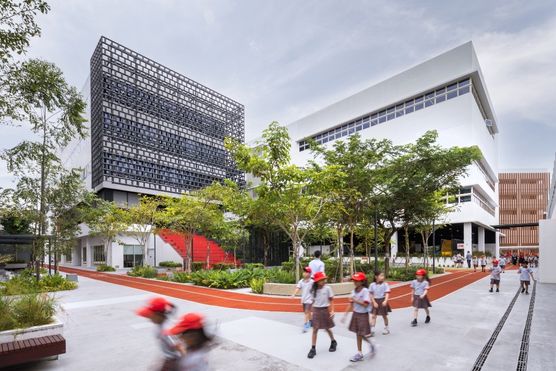
Visit XWA. Meet our IB teachers. Speak with current students. See how our university counselling works. Campus visits tell you more than any article can.
→ Book a campus tour
Look at the results. Review our historical IB scores, university placements, and scholarship outcomes. Data matters.
→ View IB Results 2025
Talk to our team. If you have specific questions about whether the IB suits your child, whether XWA offers the support they need, or how our programme compares to other schools, speak with our admissions counsellors.
→ Contact Admissions
The IB Diploma opens doors to excellent universities worldwide. XWA makes sure your child walks through them.



.jpg)