


The Complete Parent's Guide to Choosing a School in Singapore

Choosing a school in Singapore feels like choosing a university. Except your child is six, and the decision lasts for the next decade.
You're comparing fee schedules, reading websites that all promise "world-class education," and trying to work out whether location matters more than curriculum or whether facilities actually affect learning outcomes.
Should You Choose a Local or International School?
This is the first fork in the road, and it matters because it determines everything else: curriculum, fees, university pathways, and how your child experiences education.
Local Schools (Government and Government-Aided)
Singapore's local schools follow the Ministry of Education curriculum, leading to O-Levels, A-Levels, or the Integrated Programme (IP). They're academically rigorous and highly structured.
However, access is limited for foreign nationals. MOE schools prioritise Singaporean citizens, then permanent residents, with international students admitted only if places remain. Foreign students must pass the Admissions Exercise for International Students (AEIS) to qualify, and placement isn't guaranteed even then.
Fees also vary significantly by residency status. Citizens pay nothing at primary level and just SGD 5–6 per month at secondary and pre-university. But international students from non-ASEAN countries pay SGD 2,050 per month at secondary level (2025 rates), narrowing the gap with some international schools.
Choose local schools if:
● Your child is a Singapore citizen or permanent resident (foreign students face limited placement odds)
● Your family plans to stay in Singapore long-term
● Your child will likely attend university in Singapore
● You prefer examination-driven progression and national benchmarking
● Your child thrives in structured, examination-focused environments
Consider international schools if:
● Your family might relocate internationally
● You want curriculum continuity if you move
● You need flexible enrolment (most international schools accept applications year-round)
● Your child thrives in inquiry-based learning rather than exam-focused systems
● You want access to multiple university pathways (UK, US, Canada, Australia)
● You prioritise smaller class sizes and individualised attention
Both deliver excellent outcomes. What matters is which system matches your child's learning style and your family's circumstances.
Singapore's local schools average 33-34 students per class. At XWA, class sizes are capped at 24 students, with two adults—a teacher and teaching partner—in Primary classrooms up to Grade 5. This allows teachers to know each child individually and adapt lessons to different learning needs.
Understanding International School Curricula
Most international schools in Singapore offer one of three main curriculum pathways: IB, British, or American. Each leads to university, but the routes look different.
International Baccalaureate (IB)
The IB runs from Early Years through to university entrance, offering a continuous pathway:
● PYP (Primary Years Programme): Ages 3-12, inquiry-based learning
● MYP (Middle Years Programme): Ages 11-16, interdisciplinary approach
● DP (Diploma Programme): Ages 16-18, six subjects + extended essay + Theory of Knowledge
The IB suits students who:
● Enjoy learning across multiple subjects simultaneously
● Want to keep university options open globally
● Thrive on intellectual challenge and independent research
● Might relocate during secondary school (IB continuity across countries)
XWA's Class of 2025 averaged 34 points on the IB Diploma (global average: 30 points) and received USD 16.44 million in university scholarships.
British Curriculum
The British system follows:
● Primary Years: National Curriculum for England
● IGCSEs: Age 14-16, broad subject range
● A-Levels: Age 16-18, specialisation in 3-4 subjects
The British curriculum suits students who:
● Know what they want to study at university and want to specialise early
● Perform well with final examinations rather than continuous assessment
● Plan to apply primarily to UK universities
● Prefer depth over breadth in their studies
British schools in Singapore consistently achieve strong results. Leading British curriculum schools in the city report A-Level results significantly above UK averages, with some achieving more than double the UK's 27.6% A/A rate. At IGCSE level, top-performing British schools in Singapore exceed the 48.5% A/A benchmark of UK independent schools. These results demonstrate the academic rigour British curriculum schools maintain while preparing students for Russell Group and other top-tier universities.
American Curriculum
The American system offers:
● Elementary/Middle School: US Common Core or similar standards
● High School Diploma: Breadth across subjects with elective choices
● AP (Advanced Placement): Optional university-level courses
The American curriculum suits students who:
● Want flexibility to explore different subjects
● Prefer continuous assessment (GPA) over final exams
● Plan to apply to US universities where GPA and SAT/ACT scores matter
● Benefit from a less concentrated examination schedule
At XWA, students can choose between IB Diploma, Advanced Placement courses, or a High School Diploma, allowing families to pick the pathway that fits their child's strengths.
Switching Schools Mid-Journey: What You Need to Know
Many families in Singapore switch schools between Years 5-9. Sometimes it's a relocation. Sometimes it's realising the current school isn't the right fit. Either way, switching successfully requires different considerations than first-time enrolment.
What Makes Mid-Journey Switching Different
Unlike choosing a school for Early Years or Year 1, switching mid-journey means your child already has:
● Academic history (strengths, challenges, learning style)
● Social patterns (friendship needs, group dynamics comfort)
● Curriculum progress (can it continue or must you start over?)
● Expectations shaped by their current school culture
The Three Switching Scenarios
1. Academic Mismatch
Your child is either bored and unchallenged, or struggling and unsupported. The current school's pace or teaching style doesn't fit.
What to look for: Support for struggling students, challenges for advanced learners, and teachers who adapt to different learning speeds.
2. Culture Misfit
The school's values don't align with your family's. Perhaps it's too competitive, or not rigorous enough. Perhaps discipline feels harsh, or too loose.
What to look for: Speak with parents at the school about how it handles conflict, recognises achievement, and involves families.
3. Limited Pathways
Your child's current school doesn't offer the senior curriculum you need (IB vs A-Levels vs American). Or you're uncertain about how long you'll stay in Singapore and want curriculum flexibility if you relocate. Either way, you're facing a forced switch at Year 9 or 11.
What to look for: Schools with multiple pathways (like XWA's IB/AP/HSD options) that give you senior-year options and global portability.
Switching from MOE to International School After PSLE
For families in the local system, PSLE is a natural decision point. Your child has completed primary education, and you're weighing secondary options: MOE school via posting, or a different path entirely.
Why some families switch at this stage:
· Secondary posting didn't match expectations (school allocation is points-based, not guaranteed)
· You want a different curriculum for the next six years (IB or American rather than O-Levels)
· Your child struggled with the PSLE format and you're seeking a less exam-intensive environment
· Family circumstances have changed (potential relocation, sibling considerations)
What to consider:
· Curriculum transition: Students moving from MOE primary to IB Middle Years Programme (MYP) typically adjust well. Both emphasise core subjects, though MYP adds interdisciplinary projects and continuous assessment rather than high-stakes exams.
· Timing: Most international schools accept January or August entry. If PSLE results arrive in late November, January entry is tight but possible for schools with rolling admissions.
· Language requirements: Strong English is essential. If your child attended a SAP school or has limited English exposure, ask about EAL support during your school visits.
At XWA, students entering Grade 7 (equivalent to Secondary 1) receive personalised onboarding. Support teams help your child feel at home quickly while bridging any gaps between their previous curriculum and the MYP's project-based approach. Whether switching from MOE, British, or another system, the priority is the same: belonging first, then building confidence in the new learning style.
How XWA Supports Switchers
During your campus visit, ask about the transition programme for mid-entry students. What academic catch-up support is available? How does the school help new students integrate socially? The quality of answers reveals how seriously a school takes mid-journey transitions.
At XWA, 96% of new parents say they would recommend the school, suggesting that families who switch in tend to settle well. Ask current parents directly: How long did it take your child to feel at home after switching?
The Switching Decision Framework
Before you switch, answer these:
● Is the problem fixable? Sometimes communication with the current school resolves issues.
● What will actually be different? If it's teaching quality, how will you verify the new school is better?
● What's the social cost? Switching disrupts friendships. Is your child resilient enough?
● Is the timing right? Natural transition points (end of primary, start of secondary) are easier than mid-year.
When Switching Makes Sense
Switch if:
● Academic needs aren't met despite attempts to resolve
● Values misalignment affects your child's wellbeing
● Current school can't offer the pathway a child needs for university
When to Stay Put
Consider staying if:
● Issues are temporary (difficult teacher, one challenging subject)
● Your child has strong friendships and the issues are manageable, not fundamental
● Only one more year until natural transition point
Switching schools is a significant decision, but sometimes it's the right one. What matters is finding a school that fits your child now and prepares them for what's next.
What Actually Matters When Choosing a School

Marketing materials all sound similar. Every school claims excellence, innovation, and nurturing environments. Here's what to look for instead.
1. Academic Outcomes (Not Promises)
What "outcomes" means depends on your child's age.
For Early Years and Primary:
· Learning progression: How does the school track and communicate your child's development? Look for portfolio-based assessment, parent conferences, and clear learning goals rather than just grades.
· Literacy and numeracy benchmarks: Ask how reading levels and maths skills are assessed. Are children progressing appropriately for their age?
· Transition readiness: How well do students move into the next stage? For primary leavers, ask about Year 6 exhibition outcomes or equivalent capstone projects.
For Middle School:
· Subject mastery and skills development: MYP schools assess against published criteria. Ask to see grade distributions, not just highlights.
· Personal project quality: In IB schools, the Year 10 Personal Project shows how students apply learning independently. Ask to see examples.
· Pathway preparation: Are students well-prepared for their chosen senior programme (DP, A-Levels, AP)?
For Senior School:
· Exam results: IB averages, A-Level grades, AP scores (full cohort, not just top performers)
· University destinations: Where do graduates actually go? Ask for the complete list, not cherry-picked examples.
· Scholarships earned: This signals both academic strength and application support quality.
Schools that share comprehensive data have confidence in their results. Schools that share only top scores may be hiding inconsistency.
XWA publishes full IB results annually, including average scores, pass rates, and university destinations.
2. Teacher Quality and Stability
Teacher quality determines learning quality. Credentials matter, but so does continuity—a great teacher who leaves mid-year disrupts more than a solid teacher who stays.
Ask about:
● Teacher qualifications: What percentage hold advanced degrees? Subject-specific training?
● Teacher retention: What's your average teacher tenure? How many are in their first year?
● Class sizes: What's the ratio by grade level, not school-wide average?
● Specialist support: How many specialist teachers for students with learning difficulties? EAL specialists? Gifted coordinators?
When visiting, ask to meet department heads who've been at XWA for 5+ years. Ask how many teachers in your child's prospective grade level are new this year versus returning. Ask about the last time the school struggled to fill a position—and how they handled it. Transparent schools answer these questions; evasive ones don't.
3. Facilities That Impact Learning
Not all facilities matter equally. Prioritise:
High-impact facilities:
● Science laboratories (affect hands-on learning)
● Libraries with diverse collections (support research skills)
● Technology infrastructure (enables modern learning)
● Sports facilities (wellbeing and development)
Lower-impact facilities:
● Impressive architecture (doesn't affect teaching quality)
● Expensive fixtures (aesthetic, not functional)
● Showcase spaces that look impressive but see little actual use
Visit during a regular school day, not during a staged tour. Watch how spaces are actually used.
4. Values Alignment
Schools have cultures. Some prioritise academic competition. Others emphasise collaboration. Some focus on traditional discipline. Others value student voice and agency.
Ask:
● How does the school handle conflict between students?
● What happens when a student struggles academically?
● How are parents involved in school life?
● What does the school do when families disagree with policies?
During your campus visit, ask current parents how the school handled the last time their child struggled—academically or socially. Ask teachers how they involve parents in learning. Ask school leadership what happens when a family disagrees with a school decision.
The answers reveal more than any mission statement.
5. Innovation and Future-Readiness
Your child will graduate into a job market that looks nothing like today's. AI and coding curriculum matters. But the deeper question: do students develop skills to adapt, think critically, and apply learning to unfamiliar problems?
What to look for:
Transferable skills development How does the school build communication, collaboration, critical thinking, and creativity across subjects? Look for these woven into daily learning across subjects.
Higher-order thinking Are students analysing, evaluating, and creating, or mostly memorising and reproducing? Look at student work on display. Is it original thinking or templated responses?
Real-world application Do students tackle authentic problems? Look for projects with external partners, service learning with genuine community impact, or exhibitions where students present to real audiences. These experiences help students understand what they're good at and what they care about.
Career and university preparation When does guidance begin? Schools that start conversations about pathways in Year 9 (not Year 11) give students time to make informed subject choices. Ask how the school helps students explore careers and understand industries before the application rush begins.
Technology as a tool, not a headline AI and coding matter, but implementation matters more. AI taught as an after-school club is an add-on. AI integrated into Science, Humanities, and Design is part of how students think. Ask: Are makerspaces actively used during school hours, or are they showcases for tours?
The IB Learner Profile offers one useful framework: students who are inquirers, thinkers, communicators, risk-takers, knowledgeable, principled, caring, open-minded, balanced, and reflective. Ask any school (IB or not) how they develop these attributes. The specifics matter less than whether there's a coherent answer.
At XWA, university counselling begins in Grade 8. From Grade 6, students join the AI SureStart Programme and build working applications. In 2024–25, Grade 6 students created 13 AI-powered apps tackling real problems like waste management and climate action.
The Money Question: Fees, Value, and Financial Aid
International school fees in Singapore range from SGD 20,000 to SGD 45,000+ per year, depending on grade level and school.
What You're Paying For
Higher fees typically reflect:
● Smaller class sizes
● Better facilities and resources
● More diverse extracurricular programmes
● Comprehensive university counselling
● Stronger pastoral care systems
But higher fees don't always guarantee better outcomes. Look at results, not price tags.
Value vs Cost
Value comes from:
● Academic outcomes: University placements and scholarships earned
● Student growth: How much progress your child makes
● Whole-child development: Academics + character + skills
● University preparation: Counselling quality and support systems
Scholarships and Financial Aid
Many schools offer merit scholarships or financial aid. Ask about:
● Eligibility criteria
● Application process and deadlines
● Renewal requirements
● Percentage of students receiving support
If fees are a factor in your decision, it's worth a conversation with admissions. XWA offers scholarships and financial assistance on a case-by-case basis.
The Admission Process: What to Expect
Two Systems, Two Processes
If you're considering both local and international schools, the admission processes are entirely different.
For MOE Schools (AEIS/S-AEIS)
International students who want to enter Singapore's government schools must pass a centralised exam called AEIS (Admissions Exercise for International Students).The process is more complex than many parents expect:
· CEQ first (primary level): Before applying for AEIS, primary school applicants must pass a Cambridge English Qualification (CEQ) test at an authorised centre. This must be taken within 12 months of the AEIS application.
· Fixed exam windows: AEIS is held in September for entry the following January. S-AEIS (the supplementary round) is held in February/March for entry in April/May if places remain.
· Limited entry points: AEIS covers Primary 2–5 and Secondary1–3 only. There's no pathway for Primary 1, Primary 6, Secondary 4, or Junior College.
· No guaranteed placement: Passing the exam qualifies your child to be considered. MOE then allocates places based on vacancies and your declared residential area. Many students pass but receive no school offer.
For families on tight relocation timelines, the fixed exam windows and uncertain outcomes can be challenging.
For International Schools
Most international schools manage their own admissions year-round:
· Rolling applications: Apply any time. Many schools accept students throughout the academic year.
· Main intakes: August (academic year start) and January (mid-year) see the most movement.
· School-based assessment: Each school runs its ownage-appropriate assessment or interview. Typically, 2–4 weeks from application to decision.
· Confirmed placement: If your child is accepted, the place is yours once you pay the deposit.
Some schools have waiting lists for popular grade levels (especially Early Years and Grade 9), so applying early helps.
Application Steps (International Schools)
1. Submit application: Online form plus supporting documents(school reports, passport, immunisation records)
2. Assessment: Age-appropriate academic assessment, interview, or classroom observation
3. Decision: Typically 2–4 weeks after assessment
4. Acceptance and enrolment: Confirm place with deposit
What Schools Look For
International schools assess:
● Academic readiness: Can the child engage with the curriculum?
● English proficiency: Most instruction is in English (EAL support available)
● Social readiness: Can the child participate in a classroom environment?
● Family fit: Do family values align with school culture?
Schools prioritise students who will thrive in their environment over those with flawless academic records.
How to Prepare
● Visit schools during regular school days (not just staged tours)
● Involve your child in the decision (especially from age 8+)
● Be honest about your child's strengths and challenges
● Ask questions during the process (admissions teams want good fits, not just enrolments)
Your Evaluation Framework: Questions to Ask
Use this checklist during campus visits and admissions conversations:
Academic Questions
● What are your average IB/A-Level/AP results over the past three years?
● Where do your graduates attend university? (Ask for comprehensive list)
● What support do you offer for students who struggle academically?
● How do you challenge students who are ahead?
● What's your approach to homework and assessment?
Pastoral Care Questions
● How do you support student wellbeing and mental health?
● What happens if my child experiences bullying?
● What's your approach to behaviour and discipline?
● How do parents find out when something's wrong?
● What systems are in place for students who are struggling emotionally?
Practical Questions
● What are total fees, including hidden costs (transport, uniforms, trips)?
● What's your teacher retention rate?
● What's your student-to-teacher ratio by grade level?
● What extracurricular activities are included vs paid extras?
● What EAL (English as Additional Language) support do you offer?
Values and Culture Questions
● How would current parents describe the school culture?
● What makes your school different from others offering the same curriculum?
● How do you involve parents in school life?
● How do you celebrate diversity and inclusion?
● What's your approach to technology use and screen time?
Red Flags to Watch For
● Refusal to share comprehensive academic data
● High teacher turnover or frequent leadership changes
● Vague answers about fees or hidden costs
● Pressure to enrol immediately without time to decide
● Dismissive responses to questions about challenges or concerns
Making the Final Decision
After visits, research, and conversations, you'll have information overload. Here's how to decide:
1. Revisit Your Priorities
What matters most to your family?
● Academic rigour and university outcomes?
● Values alignment and school culture?
● Practical factors (location, fees, siblings)?
● Your child's specific learning needs?
2. Involve Your Child (Age-Appropriately)
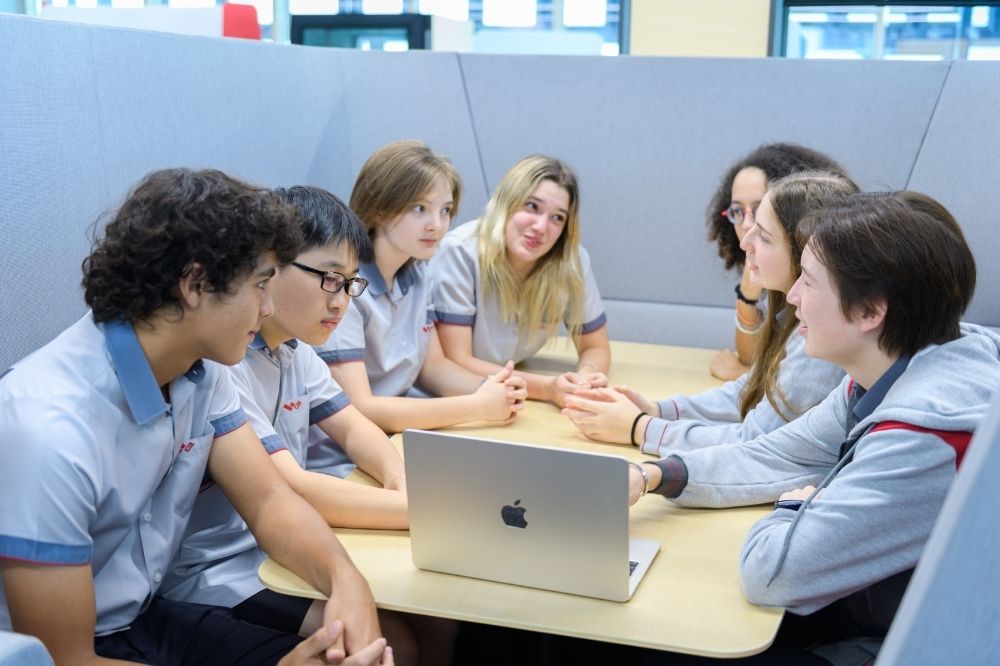
From age 8+, children can express preferences about school environments, even if they don't understand curriculum details. Ask:
● Which school felt most welcoming?
● Where could you imagine making friends?
● Which classrooms made you curious to learn?
3. Trust Your Gut
If everything looks good on paper but something feels off during visits, pay attention. If a school feels right but costs stretch your budget, explore financial aid options.
The "best" school is the one where your child will thrive academically, socially, and emotionally.
How XCL World Academy Fits Your Search

If you've read this far, you're looking for a school that combines academic excellence with genuine care for individual students.
At XWA, we offer:
● Small classes, high attention: Class sizes capped at 24, with two adults in Primary classrooms up to Grade 5. Teachers know each child by name.
● Multiple pathways: IB Diploma, Advanced Placement, or High School Diploma. Choose what fits your child.
● Proven results: Class of 2025 earned USD 16.44million in scholarships and 385 university offers.
● Early university guidance: Counselling from Year 9 to ensure informed subject choices.
● Student wellbeing focus: Pastoral staff, counsellors, and Heads of Grade work as a connected team, sharing real-time data through Komodo(a student wellbeing platform). If your child is struggling, someone will notice early.
● Supportive parent community: 96% of new parents say they would recommend XWA.
You want your child ready for a future that looks nothing like today. You care about proven outcomes, not marketing promises. You value schools that deliver through excellent teaching, personal attention, and real partnership with parents. If that's you, XWA is worth visiting.
What to Do Next
Visit XWA. Meet our teachers. Speak with current parents. See how students engage in classrooms. Campus visits reveal what websites cannot.
→ Book a campus tour
Review our results. Look at historical IB scores, university placements, and scholarship outcomes. Data matters.
→ View IB Results 2025
Talk to our admissions team. If you have specific questions about curriculum fit, fees, scholarships, or admission requirements, speak with our admissions counsellors.
→ Contact Admissions
Choosing a school shapes your child's next decade. Take your time. Ask hard questions and trust your instincts.
We're here when you're ready.




.jpg)