


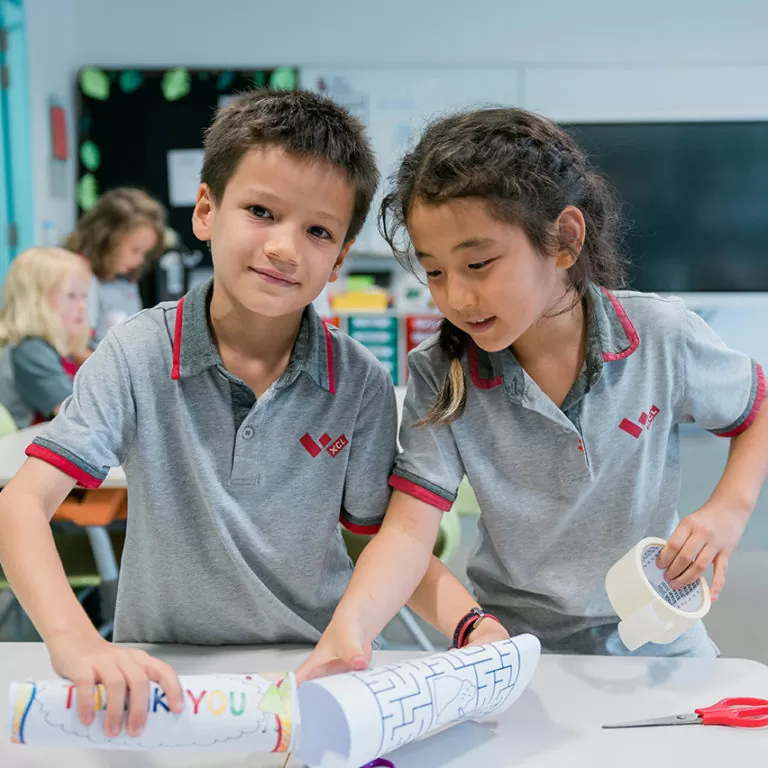
Targeted English Support, Integrated Into Every School Day
Your child receives English language support in two ways: dedicated small-group lessons and in-class assistance during regular subjects.
In dedicated EAL lessons, your child learns in a small group with an EAL specialist, focusing on grammar, vocabulary, reading, writing, listening, and speaking. These sessions are scheduled so your child stays in all core subjects alongside their peers. The environment is designed to be supportive and safe, where teachers encourage active participation in speaking exercises, provide clarifications, and offer guidance tailored to your child's needs.
In the regular classroom, EAL teachers work alongside homeroom teachers and teaching partners. They provide real-time support during lessons, helping your child access the curriculum while building English skills in context. Your child stays with their peers, participates in group work, and follows the same learning as everyone else.
This isn't a one-size-fits-all programme. The curriculum is centred around each student, responsive to their needs, and adaptable to their varying language development levels.
Key Learning
Academic English across all four skills: listening, speaking, reading, and writing. Grammar and vocabulary development. Confidence to participate in classroom discussions and group work.
Milestones Development
Progress tracked through the WIDA framework, an internationally recognised system for measuring English language development. Your child advances through defined levels, with clear benchmarks showing growth.


Learning and Growing Together
EAL support at XWA is built on one principle: your child should never feel separate from their peers.
During assemblies, specialist classes, and school events, students participate alongside everyone from day one, building friendships as their English develops.
This inclusive approach ensures full integration into the curriculum, strengthening language, communication, and social skills. Language learning accelerates when children are motivated to connect, not isolated.
Key Learning
Social communication skills developed through daily interaction with peers. Academic language learned in context. Confidence built by joining in, speaking up, and learning alongside peers.
Milestones Development
Full participation in school life from enrolment. Graduation to mainstream classes as English proficiency develops. The goal: your child no longer needs EAL support because they've built the skills to thrive independently.
What Your Child Gains Over Time
Research shows that students in bilingual programmes often make strong gains in both language development and overall learning. In this programme, students not only learn two languages, but also learn through both languages—using them to think, communicate, and solve problems across subjects. This strong bilingual foundation prepares students well for the IB Middle Years Programme.
By this stage, your child will have spent years reading, writing, discussing, and interpreting increasingly complex ideas across subjects in two languages, developing both academic proficiency and confidence.
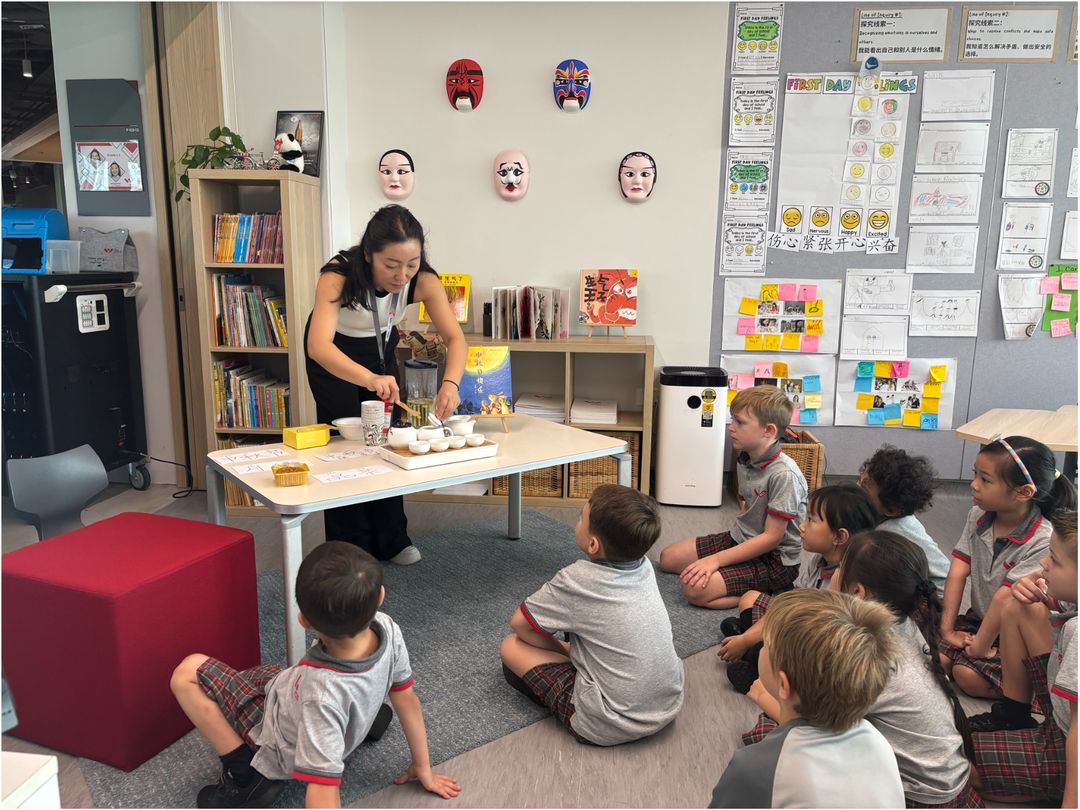
What Your Child Gets From EAL Support
The programme is structured to give multilingual learners every advantage.

Timetabled EAL Lessons
Dedicated, scheduled instruction rather than ad-hoc support. Your child knows when EAL time happens and can rely on it.

Data-Driven Progress Tracking
Regular assessment against WIDA benchmarks. You'll always know where your child stands and what progress they're making.

Full Integration Into Curriculum and School Life
Your child isn't pulled away from core learning or isolated from peers. EAL support happens around the curriculum, not instead of it.

Personalised Support
Instruction adapts to your child's level, pace, and needs. Teachers tailor guidance rather than following a rigid script.

Small Group Setting
EAL lessons happen in small groups, so your child gets focused attention and more opportunity to practice speaking.

Encouraging and Experienced EAL Teachers
Specialists who understand multilingual learners, create a safe environment for practice, and know how to build confidence alongside language skills.
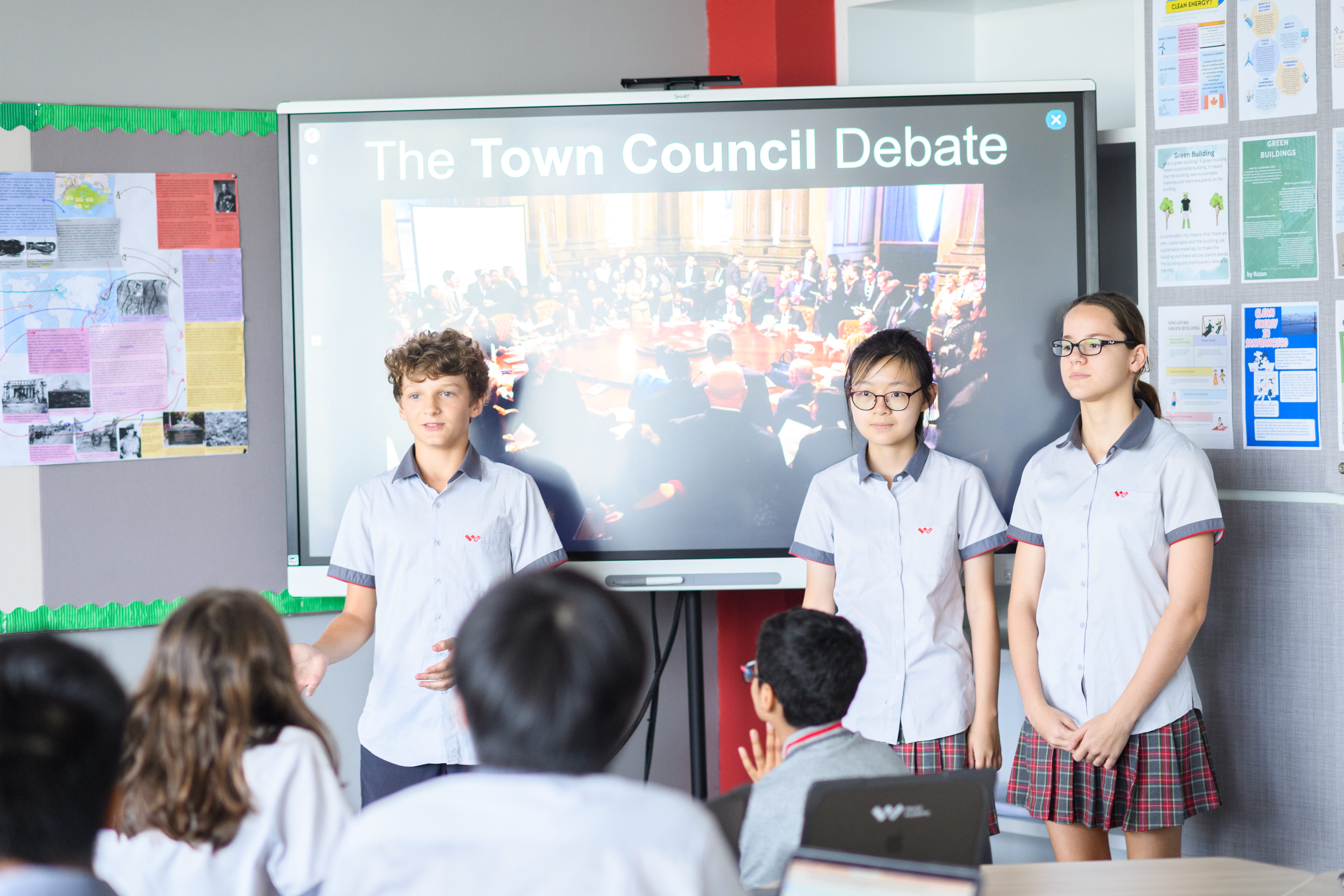
Primary Years EAL Programme (Grades 1–5)
Students in the Primary Years with an English proficiency level of "Entering" or below receive additional support through the Primary Years EAL Programme.
This programme offers fundamental language instruction in a nurturing environment designed for absolute beginners. Your child builds confidence through everyday classroom and social interactions, supported as their English continues to develop.
The approach recognises that young children learning a new language need more than vocabulary drills. They need a safe space to experiment, make mistakes, and build the courage to speak up. That's what this programme provides.
Throughout, your child remains integrated into their homeroom class for non-EAL activities, maintaining friendships and participating in school life.
Grade 5 Programme with Intensive EAL
Grade 5 students admitted to XWA with an English proficiency level of "Entering" or "Emerging" enrol in a specialised programme that balances intensive English instruction with partial integration into mainstream classes. This is a critical year. Your child is preparing for the academic and linguistic demands of secondary school. The programme accelerates English acquisition while ensuring they're socially connected and emotionally supported.


How the Programme Works
The Grade 5 Intensive EAL Programme provides personalised instruction in reading, writing, speaking, and listening. Students work at their level with focused support from EAL specialists. Maths is taught via tools like IXL, building both skills and English vocabulary, while Science and Social Studies are gradually integrated as English improves.
Staying Connected to Classmates
During morning meetings and specialist lessons; art, PE, music, swimming; students interact with classmates and join assemblies and school events. Friendships formed here motivate language learning and foster a sense of belonging.
Preparing for Secondary Years
The programme ensures academic and linguistic readiness for Secondary Years. Students continuing EAL at Grade 5 are encouraged to join an Intensive Summer Course to strengthen English before the transition.
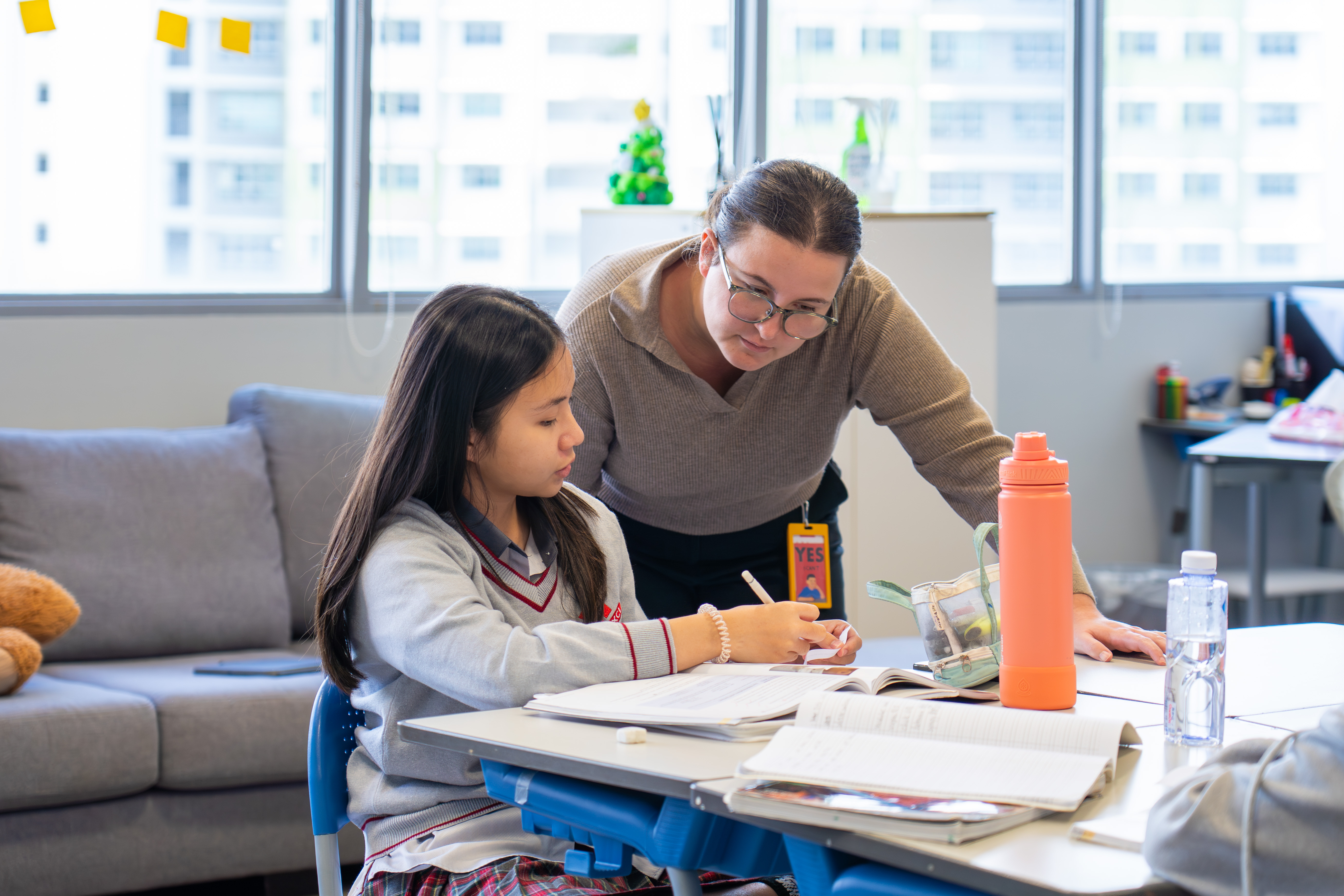
Secondary Years EAL Programme
Students in Grades 6–10 who meet the threshold for mainstream EAL support continue receiving dedicated lessons and in-class assistance through the Secondary Years programme. Progress is tracked against WIDA benchmarks, with the goal of transitioning to fully mainstream classes.
For applicants seeking admission to Grades 6–9 who do not yet meet the English proficiency level required for mainstream EAL support, XWA offers the Foundational English Programme (FEP). This intensive programme is designed to build English proficiency rapidly, with most students transitioning to mainstream within two semesters.
How Progress Is Measured
XWA uses the WIDA framework, an internationally recognised system for tracking English language development. Your child's progress is measured against clear benchmarks, so you always know where they are and what comes next.
Entering
Beginner English.
Your child is building basic vocabulary and simple sentence structures.
Emerging
Early intermediate English. Your child can communicate simple ideas and participates in classroom discussions.
Developing
Intermediate English. Your child engages with grade-level content with support and communicates more complex ideas.
Expanding
Advanced intermediate English. Your child participates fully in most academic contexts with occasional support.
Bridging
Near-proficient in English. Your child handles most academic language independently and is transitioning out of EAL support.
Reaching
Proficient in English. Your child no longer requires EAL support and thrives in mainstream classes.
Each student's progress is individually monitored and assessed to determine the appropriate instruction for their needs.

See How EAL Support Works in Practice
Book a tour, explore a classroom, and get to know firsthand how our EAL team can support your child’s learning journey.
FAQs
Get answers to the most common questions from prospective parents about our school.

No. EAL lessons are scheduled so your child stays in all core subjects alongside their peers. EAL support happens around the curriculum, not instead of it.
No. EAL students participate in homeroom, specialist classes, assemblies, and school events alongside everyone else. Small-group EAL lessons happen during scheduled periods, not during core instruction time.
During admissions, your child completes a short written and spoken English assessment. This determines their starting level so teachers can provide the right support from day one.
This varies by child and starting level. Even with dedicated support and full immersion in an English-speaking environment, reaching the proficiency needed for mainstream education can take several years. That's normal, and each student's progress is individually monitored to ensure they receive the right instruction at every stage.
For students in Grades 6–9 who need more than mainstream EAL provides, the Foundational English Programme offers intensive instruction with the goal of transitioning to mainstream within two semesters.
XWA recommends enrolment in an Intensive Summer Course designed to enhance English language skills before transitioning to secondary school. This helps ensure your child is prepared for the academic demands ahead.
Still have questions?
We're here to help!