


Two Languages, Two Teachers, One Classroom
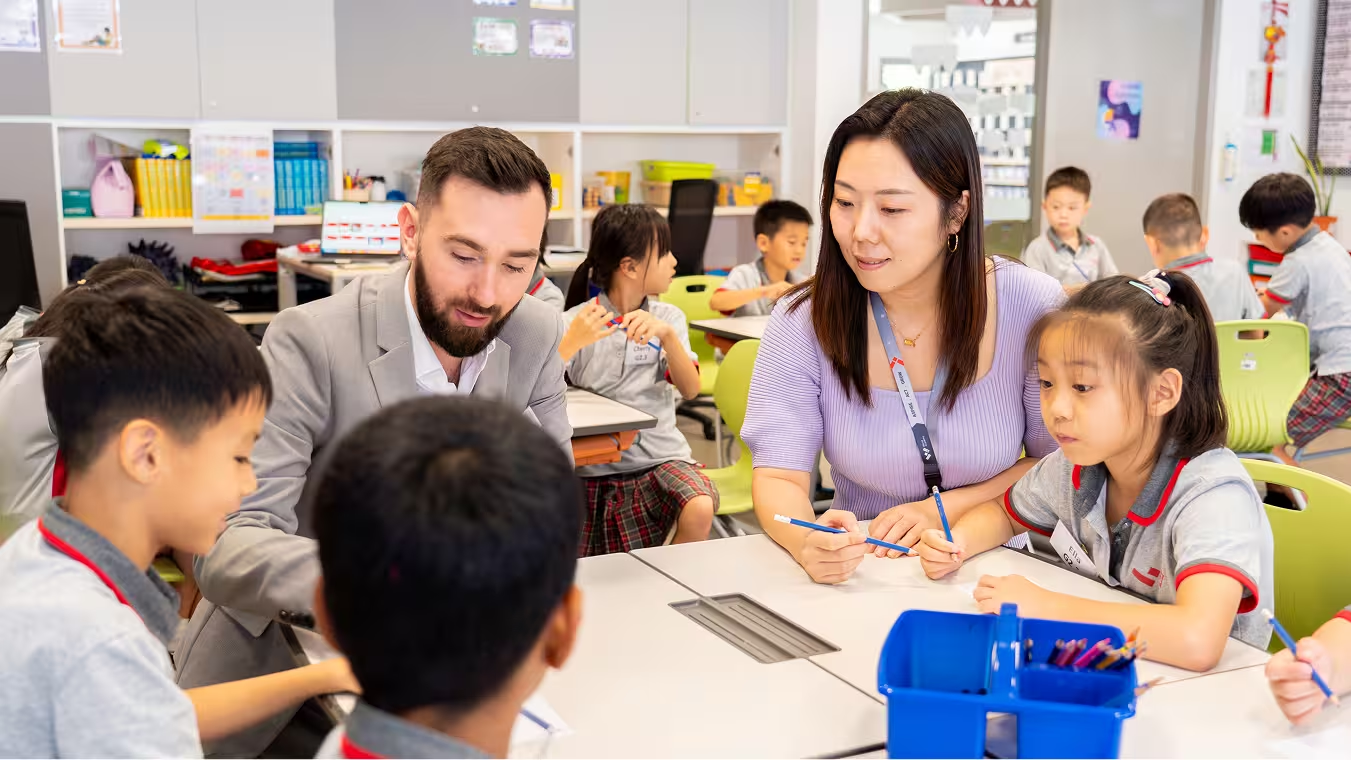
Each bilingual class is co-taught by an English homeroom teacher and a Chinese homeroom teacher, both native speakers, who plan, teach, and assess together. Working with the same group of students each day, they provide consistent, coordinated support, ensuring that your child’s progress is closely monitored across both languages by teachers who know them well.
The two-way immersion model brings English-dominant and Chinese-dominant learners together in the same classroom. Throughout the school day, students learn collaboratively, using both languages in discussions, group work, and daily routines. This integrated approach helps both languages become a natural part of how students learn, communicate, and contribute in the classroom.
Academic Learning Across Both Languages
Your child studies the same core subjects as students in the mainstream programme, including Mathematics, Literacy, Science, and Social Studies. English and Chinese are both used across these subjects, so language development happens alongside academic learning throughout the day.
The curriculum is aligned with internationally recognised academic standards: AERO Standards for English Literacy and Social Studies, the Next Generation Science Standards (NGSS) for Science, and the Chinese Proficiency Grading Standards for International Chinese Language Education for Chinese Literacy. Your child's progress is measured against recognised external standards, rather than internal school expectations alone.
Student progress is monitored through both internal assessments and external benchmarks, including the Youth Chinese Test (YCT), WIDA, MAP, and IB frameworks. This provides a clear, comprehensive view of how your child is developing in both languages over time.
Language & Culture
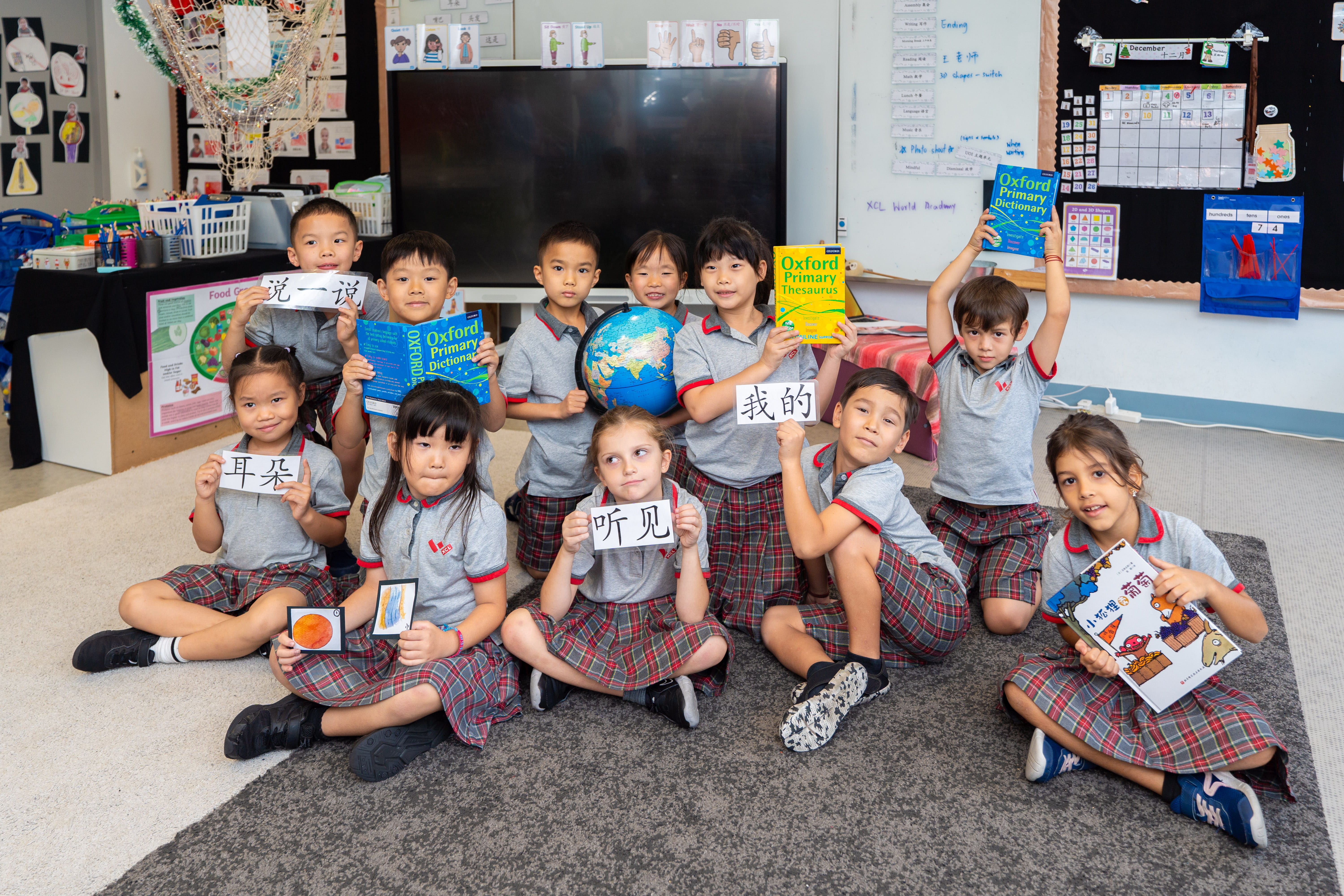
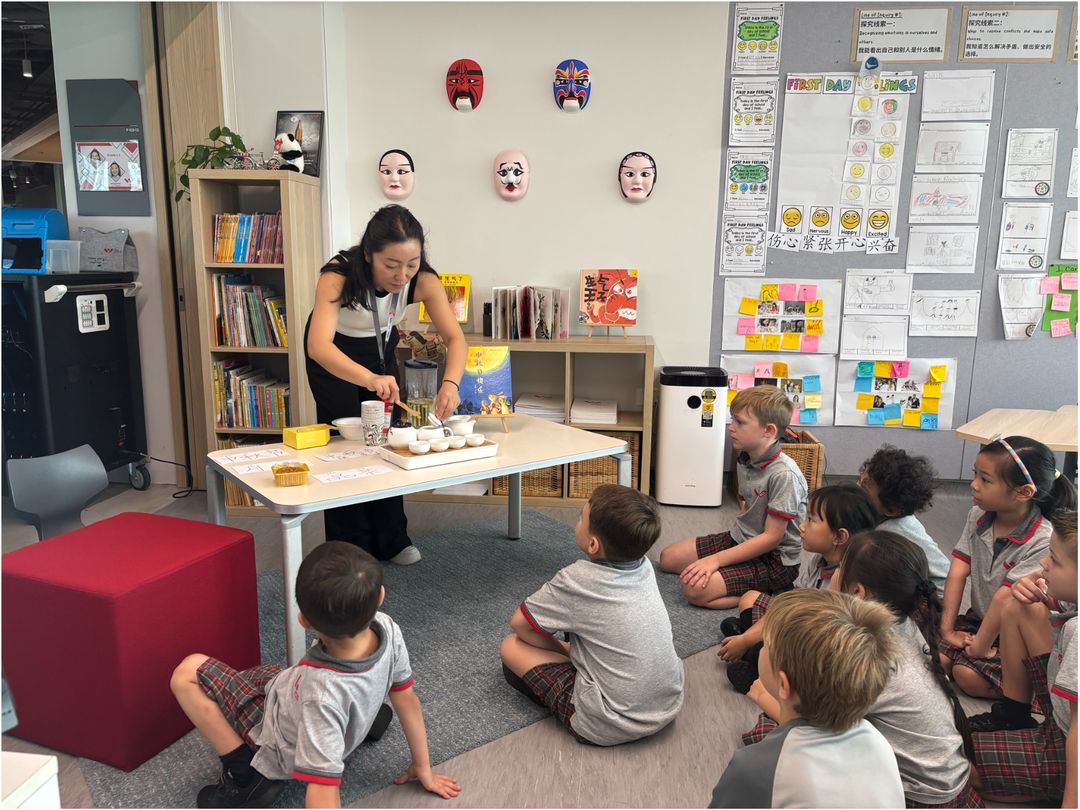
Language and culture are closely connected in the bilingual programme. As students develop their language skills, they are also introduced to cultural perspectives and traditions.
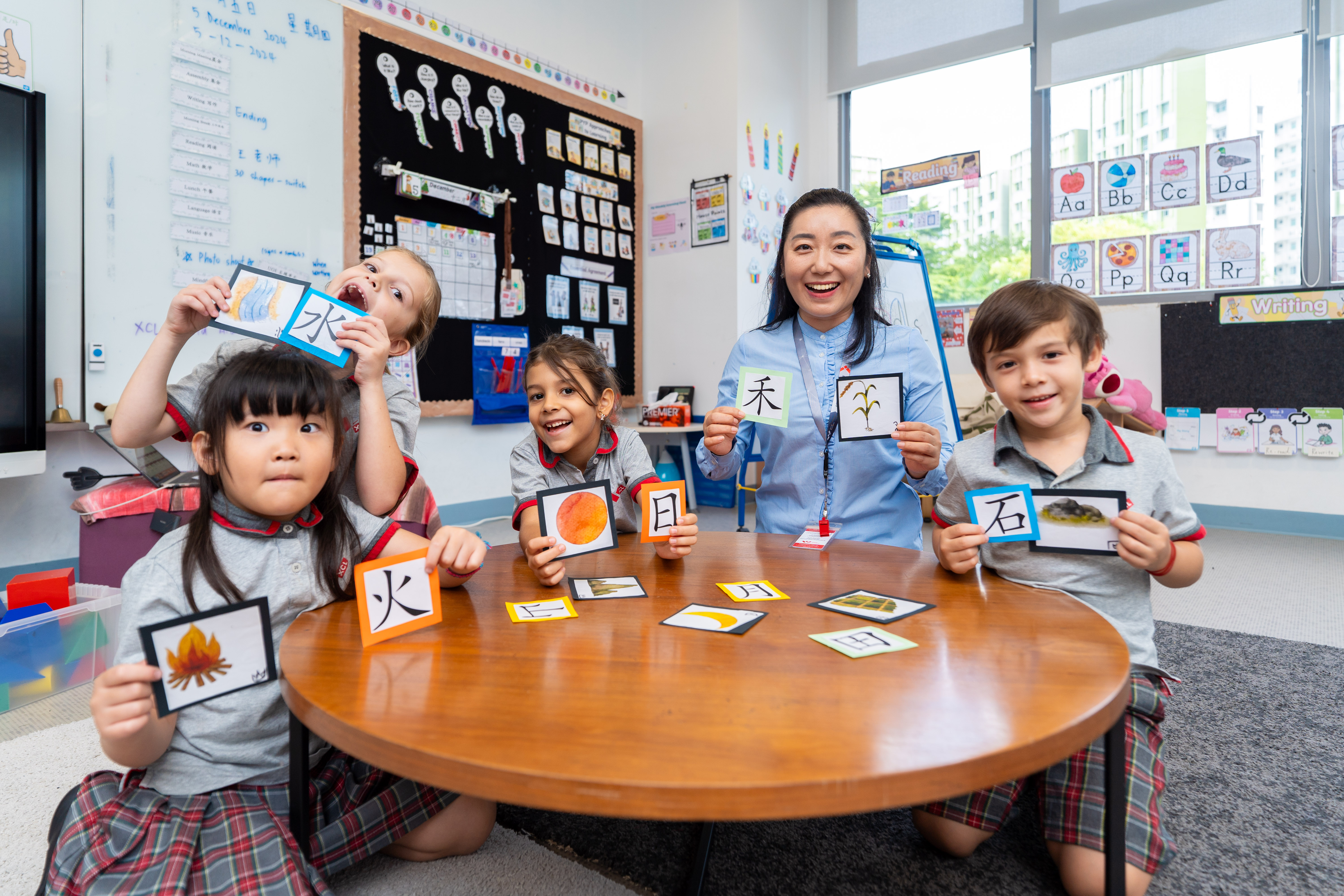
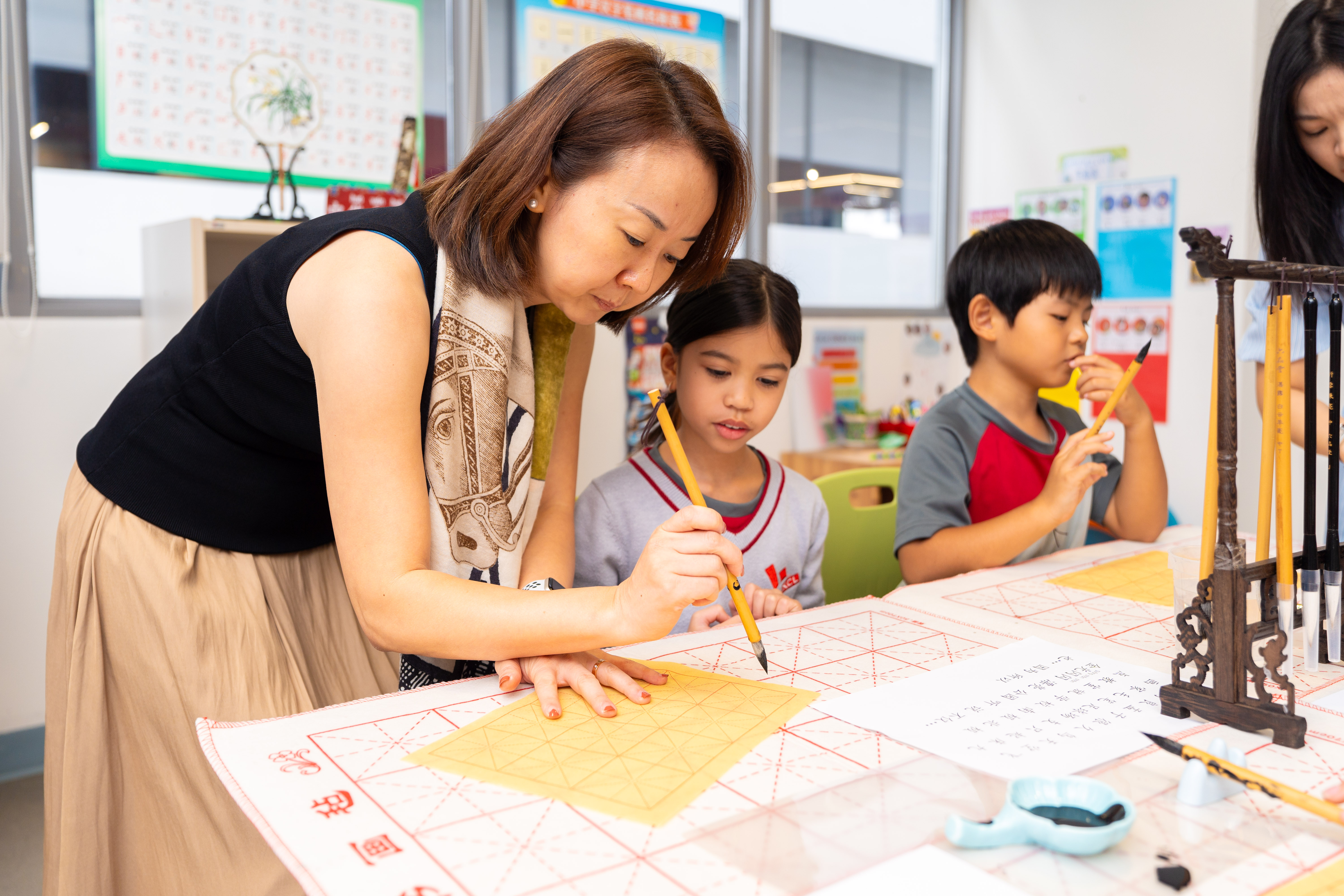
Through engaging and meaningful experiences, students explore elements such as Chinese calligraphy, tea appreciation, the 24 solar terms, and the evolution of Chinese characters (hanzi 汉字). These experiences deepen their understanding of the language and its cultural context.
By learning language and culture together, students develop curiosity, respect for diverse perspectives, and an appreciation of the world around them
What Your Child Gains Over Time
Research shows that students in bilingual programmes often make strong gains in both language development and overall learning. In this programme, students not only learn two languages, but also learn through both languages—using them to think, communicate, and solve problems across subjects. This strong bilingual foundation prepares students well for the IB Middle Years Programme.
By this stage, your child will have spent years reading, writing, discussing, and interpreting increasingly complex ideas across subjects in two languages, developing both academic proficiency and confidence.
Expert-Led Bilingual Learning, Built with Purpose
The Bilingual Programme is designed and led by Angela Gao, Head of Bilingual, who developed XWA's custom Chinese curriculum and is undertaking doctoral research in international Chinese language education.
Meet Our Bilingual Teaching Team
Visit campus to meet the bilingual teaching team and see how the programme works in everyday classroom learning.
FAQs
Get answers to the most common questions from prospective parents about our school.

The programme currently runs from Pre-K to Grade 5.
No. The programme is designed so that students continue developing strong English while building Chinese at the same time. Because both languages are used across academic learning, they reinforce each other rather than developing at each other's expense.
Yes. The Bilingual Programme is fully aligned with the Mainstream Programme for Mathematics, English, Science, and Social Studies. Students work towards the same curriculum requirements, taught through a bilingual timetable and coordinated instructional planning.
Yes. Children do not need to speak Chinese before joining the programme. The two-way immersion model is designed for students from different language backgrounds to learn together, with additional support available where needed so that each child can make progress at an appropriate pace.
Progress is tracked through internal assessment and external benchmarks including YCT (Youth Chinese Test), WIDA, MAP, and IB frameworks. This gives you a consistent picture of how your child is developing in both languages over time.
Still have questions?
We're here to help!