


Moving from Japan to Singapore Schools: What Every Parent Needs to Know
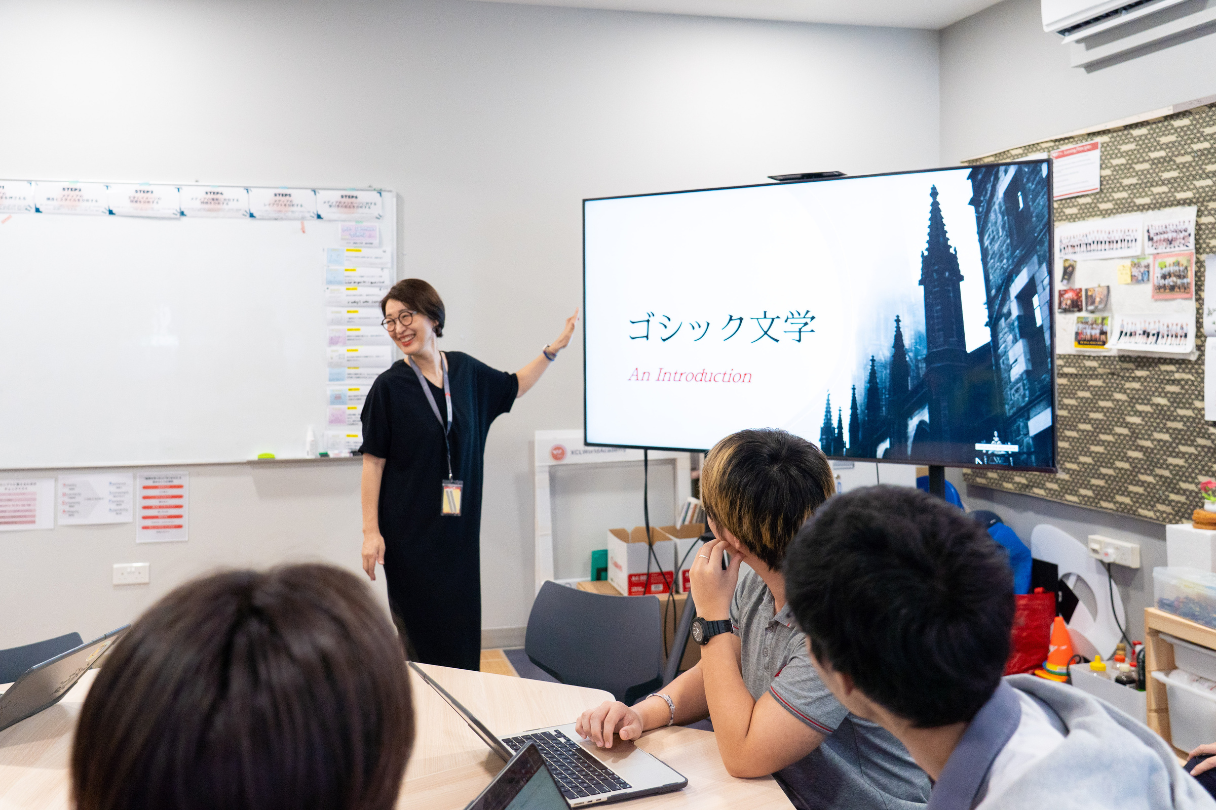
Whether you are preparing for a move to Singapore, recently arrived, or already settled and rethinking your child’s education, choosing a school here means navigating educational systems that differ in meaningful ways.
The Japanese system is structured, sequential, and teacher-guided. The inquiry-based international curricula common in Singapore operate on a different logic. Neither is superior, but the transition requires understanding, preparation, and honest expectations.
This guide covers what you actually need to consider, from school options and English language support to maintaining your child’s Japanese and keeping university doors open, including back in Japan.
Your School Options in Singapore
Japanese families in Singapore generally choose between three paths.
The Japanese School Singapore (JSS) operates two primary campuses (Clementi and Changi) and one secondary campus (West Coast), following Japan’s national curriculum. Your child continues learning in Japanese, progresses through the same content as peers in Japan, and can return to the Japanese system with minimal academic disruption. For families on short postings who plan to re-enter the Japanese school system, JSS provides continuity and familiarity.
International schools, of which there are more than 80 in Singapore, offer curricula including the International Baccalaureate (IB), British, and American systems. Instruction is primarily in English, and your child will learn alongside classmates from dozens of countries, develop English fluency, and earn qualifications recognised by universities worldwide, including in Japan. Some international schools, like XCL World Academy (XWA), also offer structured Japanese home language programmes, so choosing an English-medium school does not necessarily mean pausing your child's Japanese development.
Singapore’s local government schools are an option in theory, but access is limited for foreign nationals. Priority goes to Singaporean citizens and permanent residents, and available places are allocated through a competitive exercise. Few Japanese families pursue this path given the limited availability.
For most families, the decision comes down to JSS or an international school, and that depends on three things: how long you expect to stay, what language outcomes matter to you, and where your child might go to university.
The Biggest Shift: From Japanese-Medium to English-Medium Learning
The most significant change your child will experience is learning every subject in English rather than Japanese. Mathematics, science, humanities, and classroom discussion all happen in a new language. This is the adjustment children feel every day, and it is also the one schools can support most directly through structured language programmes and immersive classroom practice.
Younger children typically pick up the rhythm of an English-medium classroom within weeks, while older students adapt quickly with structured language programmes that build academic fluency alongside subject knowledge. The discipline, thoroughness, and strong study habits your child developed in the Japanese system are genuine advantages in the IB, which rewards exactly those qualities applied to independent research, collaborative projects, and extended writing.
At XCL World Academy, every new family receives tailored support during the transition, no matter which school system they are coming from or their child’s current level of English proficiency. Dedicated programmes, orientation sessions, and experienced multilingual staff ensure students settle quickly and confidently.
For example, Marie Shirasaka’s children adapted seamlessly in their first year, thriving academically and socially in a new environment. Similarly, Yukako Nunokawa’s son joined XWA speaking only Japanese, and within two years, he was confidently navigating lessons in three languages, a testament to the school’s supportive and immersive approach to language learning.
There are also pedagogical differences worth understanding. In the Japanese system, learning is carefully sequenced, with teachers leading students through prescribed content at a shared pace. In the IB's Primary Years Programme (PYP) and Middle Years Programme (MYP), learning is inquiry-based. Students investigate concepts through questions, and assessment includes projects, presentations, and portfolios alongside examinations. These differences are real but manageable, and most students find their footing within a term or two.
The IB Diploma Programme (DP), taken in the final two years of secondary school, is academically demanding. Students study six subjects across different groups, write an extended essay, complete a Theory of Knowledge course, and fulfil creativity, activity, and service requirements. The programme demands breadth of study, depth of thinking, and the ability to connect ideas across subjects.
English Language: What to Expect
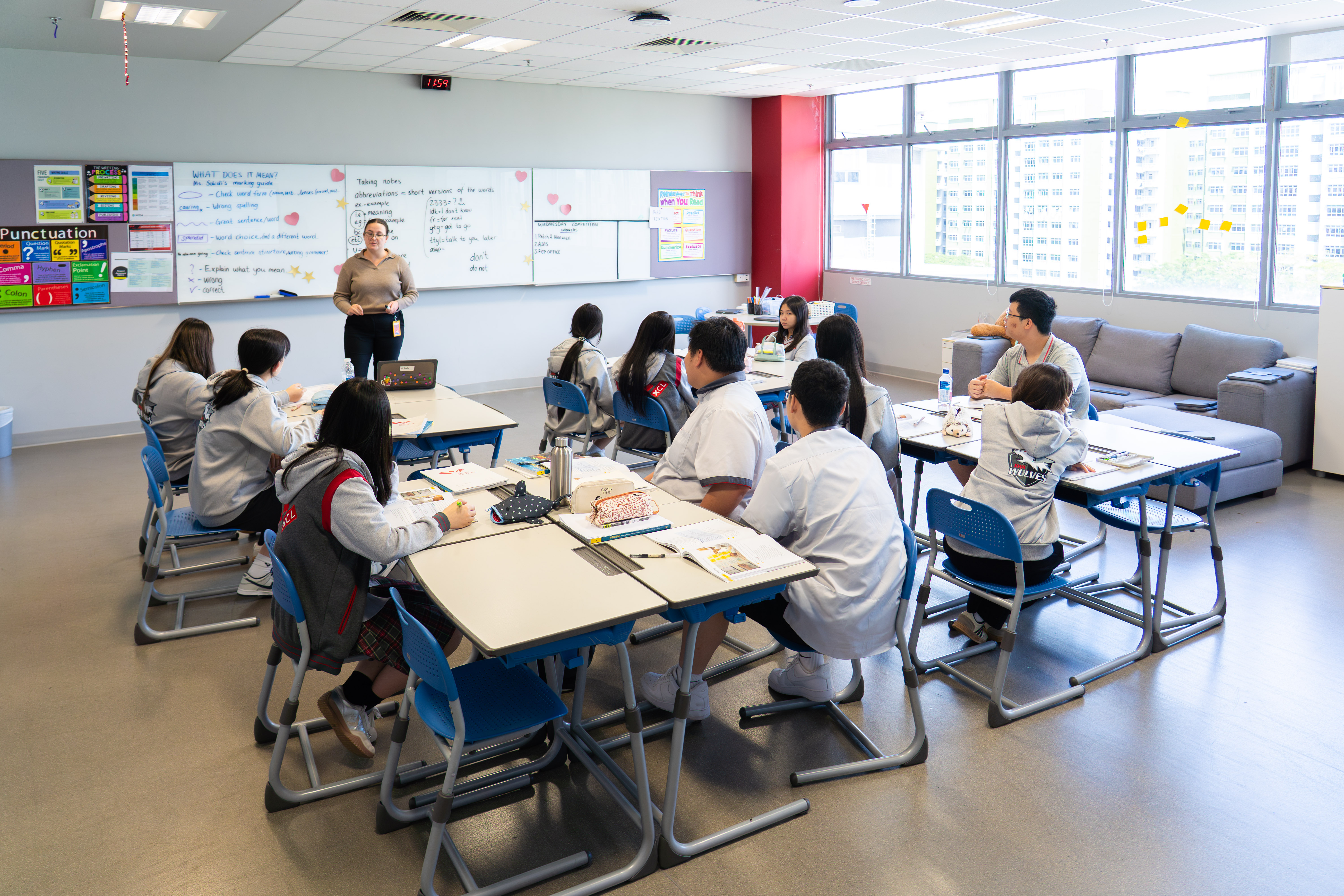
If your child has had limited English exposure in Japan, the first months at an English-medium school will be challenging. This is one of the most common concerns Japanese parents raise, and it deserves an honest answer.
Children in Early Years and lower primary tend to pick up conversational English quickly, often within the first few months through immersion and play. Academic English takes longer, typically one to three years depending on the child and the quality of support available.
For older students, the transition requires structured help. Look for schools that offer dedicated English as an Additional Language (EAL) or Foundation English programmes rather than simply placing your child in mainstream classes with occasional support.
At XCL World Academy, the Foundation English Programme (FEP) provides intensive English instruction for students in Grades 6 to 9 who are still developing proficiency. The programme delivers four hours of direct English instruction daily plus one hour of content-based learning through subjects such as science, visual arts, and physical education, totalling 910 hours of language-rich instruction per year.
Two students illustrate what this looks like in practice: Taichi Hotta arrived from Japan with no prior English background, and two years later he is excelling in Grade 12 of the IB Diploma Programme, maintaining an average of 5 across his DP courses while also completing two Advanced Placement classes. Rinka Fujiwara came through FEP and within one year achieved the highest possible score (6 out of 6) across all four WIDA language domains: speaking, listening, reading, and writing.
Both students came through XWA's Foundation English Programme, which delivers four hours of dedicated English instruction daily and is designed specifically for students beginning their English journey.
What to ask any school: How many hours of dedicated EAL or foundation English instruction does my child receive each day? What proficiency framework do you use to measure progress (WIDA, Cambridge, or other)? How long do students typically take to transition into mainstream classes? What is the maximum class size in the EAL programme?
Continuing Your Child's Japanese Language Journey
Your child’s Japanese can continue to develop at an English-medium school, though it requires deliberate effort from both the school and your family.
Kanji progression is one of the most common concerns Japanese parents raise, because a child who falls two years behind during an overseas posting faces a significant catch-up task upon returning to Japan. Simply speaking Japanese at home is not enough to maintain written literacy at grade level.
When evaluating international schools, ask whether they offer a structured Japanese home language programme, and ask what “structured” actually means. A weekly conversation class maintains speaking skills but won’t keep your child progressing in kanji, reading comprehension, or written expression at grade level.
XWA’s Japanese Home Language Programme runs from KG2 to Grade 5, with two sessions per week. Students learn PYP Unit of Inquiry content in Japanese, building connections between their English and Japanese understanding of the same concepts. Kanji learning is individualised according to each student’s proficiency rather than assigned by grade level, which means children work at an appropriate pace regardless of when they entered the programme. The school also offers the Kanji Proficiency Test (Kanken) on campus, giving students a recognised benchmark for their Japanese literacy development.
Beyond school, Singapore’s Japanese Supplementary School (日本語補習授業校) offers weekend classes for children attending international or local schools who want to maintain Japanese curriculum alignment. Many families use a combination of weekday home language support at school and weekend supplementary classes to keep both languages progressing.
University Pathways: Japan and Beyond
.jpg)
Despite what many Japanese parents assume, choosing an international school does not close the door to Japanese universities.
Japan’s Ministry of Education, Culture, Sports, Science and Technology (MEXT) has recognised the IB Diploma as a valid university entrance qualification since 1979. Since 2013, MEXT has actively promoted the use of IB scores in university admissions, and more than 50 Japanese universities now consider IB scores when screening candidates, including Kyoto University, Osaka University, Waseda University, and Keio University.
In practice, IB Diploma holders apply through dedicated admissions tracks similar to the AO (Admissions Office) entrance examinations or the special examinations for students educated overseas (帰国子女入試). Many universities assess IB candidates through a combination of IB scores, essays, and interviews rather than the standard entrance examination alone.
Meanwhile, the IB Diploma opens pathways that the Japanese high school diploma alone does not. XWA’s Class of 2025 received 385 university offers and USD 16.44 million in scholarships from institutions across the UK, US, Canada, Australia, and Asia. With an average IB score of 34 points (the global average is approximately 30), XWA graduates have entered universities including UC Berkeley, University of Toronto, UCL, King’s College London, University of Sydney, NUS, and NTU. As of January 2026, XWA’s Class of 2026, comprising 53 students, has already received over 395 offers from top global universities, including NYU, RISD, the University of Edinburgh, and more. Impressively, more than 70% of the cohort have also secured scholarships totaling over USD 17 million. With the final exams yet to be completed at the time of publishing, these numbers are expected to rise even further, reflecting the exceptional achievements and potential of our students.
For families uncertain about their long-term plans, the IB provides optionality. Your child can apply to universities in Japan, the UK, the US, Australia, or Singapore, and make that decision in Grade 11 or 12 rather than committing to a single national pathway at age 14 or 15.
Practical Considerations
Academic calendar: Most international schools in Singapore run August to June. JSS follows the Japanese academic calendar (April to March). If you are transferring mid-year from Japan, look for schools that accept enrolment year-round and provide transition support whenever your family arrives. XWA welcomes new students at any point in the academic year, with dedicated onboarding and language support from day one.
Student Pass: Foreign students may attend an international school in Singapore if they are a Singapore Permanent Resident (PR) or hold a Dependant’s Pass (DP) or Long-Term Visit Pass (LTVP) or Immigration Exemption Order (IEO).
Students who do not hold one of these passes must apply for a Student’s Pass issued by the Immigration & Checkpoints Authority (ICA). Most international schools with EduTrust, like XCL World Academy, can support families with the Student's Pass application as part of the enrolment process. Student pass applications may take between 2 to 4 weeks to process and hence, it is important to factor this timeline into your school planning.
Where Japanese families live: According to the 2024 BDRC International Schools Study, Japanese families in Singapore are concentrated in several areas, including Orchard/River Valley (23%), Newton/Novena (15%), and Ang Mo Kio/Bishan/Thomson. Singapore is a compact island with excellent public transport, and most journeys take 30 to 40 minutes by car. XWA's campus is approximately 20 minutes' drive from Orchard Road, and school bus routes serve all major residential areas popular with Japanese families.
Fees: International school fees in Singapore vary significantly, from around SGD 20,000 to upwards of SGD 60,000 per year depending on grade level, school, and whether fees include extras such as school bus, uniforms, and trips. Many employers include an education allowance as part of relocation packages. Ask your HR team about the specifics before you shortlist schools, as this will narrow your options practically.
Questions to Ask Any School You Visit
.jpg)
Use these during campus tours or admissions conversations:
1. What specific English language support do you offer for Japanese-speaking students with limited English? How many hours per day?
2. Do you offer a Japanese home language programme? What does it include, and how does it connect to the core curriculum?
3. How many Japanese students currently attend the school, and is there Japanese-speaking staff available to support families during the transition, including those enrolling mid-year?
4. What is your typical timeline for a Japanese student to move from EAL/foundation English into mainstream classes?
5. Can you share examples of Japanese students who have successfully transitioned? Where did they go to university?
6. What pastoral or social support do you provide for children adjusting to a new language and culture?
How XCL World Academy Supports Japanese Families
XWA serves families from over 40 nationalities and has built specific programmes to support Japanese students through the transition.
The Foundation English Programme provides structured language development for secondary students, with four hours of dedicated English instruction daily. The Japanese Home Language Programme maintains and develops your child’s Japanese from KG2 through Grade 5, with inquiry-based learning connected to the IB curriculum and individualised kanji instruction. The school offers the Kanken examination on campus.
XWA delivers the full IB continuum (PYP, MYP, and Diploma Programme) alongside Advanced Placement courses and a High School Diploma option, giving your child flexibility to choose the pathway that fits best. The Class of 2026 has already secured over 395 university offers, and earned more than USD 17 million in scholarships, with the number only expected to rise further.
Beyond academics, XWA has a welcoming and active Japanese family community. Japanese liaison teachers support both students and parents in navigating school life, providing reassurance in your own language when you need it. The school runs regular social events that bring parents together across nationalities, along with free English classes and fitness sessions for parents. Events like Language Week bring families together across ages and nationalities to share food, traditions, and stories. You can read more from Japanese families at XWA, including Marie Shirasaka on learning beyond the classroom and Yukako Nunokawa on finding belonging in a new school community.
If you are weighing your options, a campus visit is the most useful next step. Meet the FEP team, see the Japanese Home Language Programme in action, and talk with current families who have made this transition.


.jpg)